
KompSat-2 (Arirang-2) satellite was developed by engineers of the Korea aerospace Research Institute (KARI). Launch of the spacecraft into a sun-synchronous orbit with a height of 685 km with an inclination of 98.13° was carried out on July 28, 2006 from the Russian cosmodrome Plesetsk by carrier rocket "Rokot".
Technical characteristics of the spacecraft imaging systemKompSat-2 satellite
| Type of shooting | Optical |
|---|---|
| Shooting modes | Mono and stereo |
| Number of channels | 5 |
| Channel set | PAN+RGB+NIR |
| Permission on the ground PAN, m | 1 |
| Permission on the ground MS, m | 4 |
| Capture width | 15 |
| CE90 binding accuracy, m | 50 |
| Method of obtaining a stereo pair | Within a single orbit |
| Dynamic range, bits/pixel | 10 |
Characteristics of the space satellite
| Operator | KARI |
|---|---|
| Operating country | Republic of Korea |
| Launch date | 28.07.2006 |
| Mission completion date | Mission active |
| Orbit type | Sun-synchronous |
| Orbital altitude | 685 |
| Re-shooting period, days | 3 |
| Service life | 5 |
| Type of shooting to order | Archive/New tasking |
| Availability of samples | Yes |
Description of the satellite KompSat-2 satellite
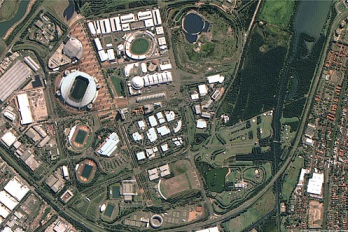
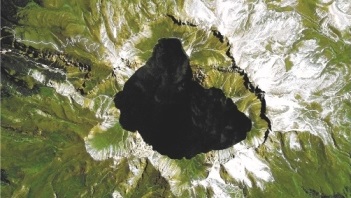
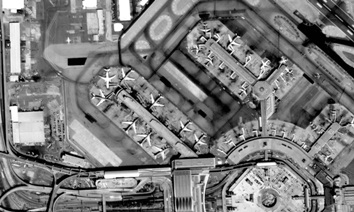
The KommSat-2 satellite was created to conduct high-resolution land surveys for environmental monitoring, natural resource management, defence and security purposes. It was launched by a H-IIA rocket from the Tanegashim launch site in Japan on 28 July 2006. The satellite operates in a sun-synchronous orbit at an altitude of approximately 685 km.KompSat-2 has the resolution of visual images up to 0.7 m and multispectral images up to 2.8 m. It works in spectrum range from visible to infrared. A special feature of the satellite is the ability to obtain high-quality images of the Earth with different spectrum characteristics for different applications.
The KompSat-2 satellite is developed by Korea Aerospace Research Institute (KARI) of South Korea.