Thematic maps, orthophotomaps and infrastructure monitoring from RS at the exploration, field-development, transport and ecology stages.
Search the site
What the service is used for
Geological HC exploration
Thematic and photogeological maps, identification of oil-and-gas-prospective structures from aerial and satellite images, bases for well placement.
Field development
Digital map base, orthophotomaps, mine-surveying plans, monitoring of construction and changes on licence blocks.
Pipeline transport
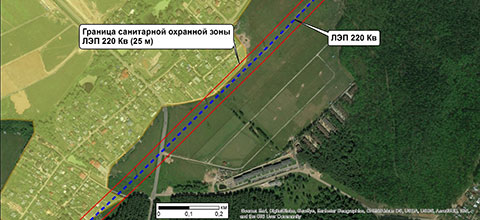
Monitoring of routes from space, pipeline situation plans, longitudinal profiles, environmental-risk maps along the pipeline.
Environmental management
Environmental maps, inventory of disturbed lands, oil-spill monitoring and damage assessment in emergencies.
Industrial safety
Hazardous geological processes, ground-surface deformations from radar data, control of potentially hazardous objects.
Need a site assessment?
Describe the licence block or route. A specialist will select the RS archive and the set of thematic maps.
What you will receive as a result of the work
01
Geological HC exploration
Thematic and photogeological maps, identification of oil-and-gas-prospective structures from aerial and satellite images.
Updating of exploration topographic bases, maps of engineering-geological zoning, neotectonics, placement of exploration wells and RS analysis for seismic microzonation.
What you get
- maps of geological-structure elements and the deep structure of the area
- interpretation of prospective structures by principal component analysis
- engineering-geological zoning maps at scales 1:100 000 – 1:200 000 and smaller
The map set and scales are fixed in the terms of reference; archive availability and cloud cover affect survey dates.
02
Field development
Digital map base, orthophotomaps and mine-surveying and geodetic plans at the design, construction and operation stages.
RS data at the field-development stages, monitoring of construction progress and changes on licence blocks, a topographic base with existing and planned facilities.
What you get
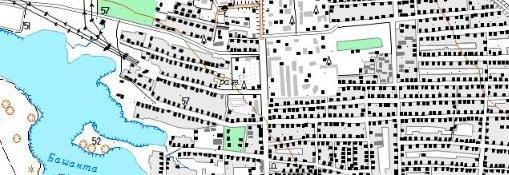
- a digital cartographic base at scales 1:5 000 – 1:100 000
- digital orthophotomaps at scales 1:500 – 1:5 000
- mine-surveying and geodetic plans and topographic maps of field development 1:2 000 – 1:10 000
Scale, coordinate system and monitoring frequency are set by the contract and the ToR.
03
Pipeline transport
Monitoring of routes, situation plans of the gas-transport system, longitudinal profiles and environmental-risk maps.
For Russia the source specifies satellite monitoring of pipelines; for foreign markets — an option to develop a GIS system. Control of geological hazards and leaks from RS data.
What you get
- maps of the forecast state of natural components on sites with elevated environmental risk at scales 1:5 000 – 1:100 000
- situation plans with the exploration area and the gas-transport system
- plans and longitudinal profiles of pipelines at scales 1:200, 1:500, 1:1 000, 1:2 000
The composition and scale of the plans are per the terms of reference; satellite monitoring does not replace in-line inspection if it is required separately.
04
Environmental management
Environmental maps, inventory of disturbed lands, oil-spill monitoring and damage assessment in emergencies.
Retrospective and forecast of changes in environmental components, documentation of contaminated lands and water bodies, assessment of anthropogenic impact from RS materials.
What you get
- schematic environmental maps at scale 1:25 000 and smaller
- maps of decisive impacts, retrospective and forecast at scales 1:5 000 – 1:50 000
- materials of spill monitoring and water-body pollution
Spill detection depends on the sensor type, cloud cover, sea state and survey date; not every incident is visible on a given day.
05
Industrial safety
Sites of hazardous geological and technogenic processes, ground-surface deformations from radar data, control of potentially hazardous objects.
InSAR for terrain and pipeline stability; high-resolution optics (in the source — WorldView-3, VNIR and SWIR) for vegetation and minerals; UAV — detailing for 3D seismic survey.
What you get
- delineation of hazardous-process zones from aerial and satellite imagery
- monitoring of ground-surface deformations from satellite radar data
- materials for monitoring the condition of potentially hazardous objects
The suitability of radar interferometry depends on the scene archive, vegetation, terrain and survey geometry.
06
Economic effect of applying RS
Up to a 10–30% reduction in operating costs.
Exploration costs are 5–7 times lower compared with traditional methods.
How the work goes
Real projects — real results
We solve complex challenges using advanced technologies and expertise in geospatial data.



Cost and timeline
The cost and timeline of RS work for an oil and gas facility depend on the area, survey type and map set.
- site area and life-cycle stage: exploration, field development, production, transport or ecology
- data type: satellite imagery, aerial survey, UAV, radar / InSAR, high-resolution optics
- whether archive purchase or a new survey is needed, or the client provides the materials
- product composition: thematic maps, orthophotomaps, pipeline monitoring, spill assessment
The cost of the work is calculated individually
Timelines depend on the area, survey type and product composition
The final estimate is agreed after the site and product composition are described
What is needed for a quote
To agree the terms of reference for RS for an oil and gas facility, provide:
- the task: HC exploration, field development, pipeline, ecology or industrial safety
- the area of interest — coordinates, licence-block outline, route or SHP file
- the work stage: prospecting, reserves assessment, construction, operation or decommissioning
- whether you have your own images and maps or need archival / new satellite, aerial or UAV survey
- requirements for the scale of maps and orthophotomaps, if they are already known
- whether radar deformation monitoring (InSAR) or optical control of vegetation and spills is needed
If survey parameters have not been set yet, describing the facility and the purpose is enough — specialists will propose the RS data composition.
Describe the licence block or route — we will clarify the archive, a new survey and the map set.
Why Innoter
Prompt access to archives
Suitable archive imagery can be obtained faster when the required area and date are already available from operators.
No aviation clearances
A new satellite survey does not require the flight clearances typical of aerial surveys.
Large and remote areas
A single satellite pass covers large areas and makes it possible to work in hard-to-reach regions.
Direct agreements with operators
Distribution agreements help select archive imagery and order new surveys from different providers.
Software and server infrastructure
Modern software and computing capacity for quality control and processing of large data volumes.
Experienced specialist team
Years of experience on complex projects and specialists in cartography, photogrammetry and remote sensing.
RS data, sensors and mapping scope
Satellite, aerial and UAV survey, InSAR radar and high-resolution optics for HC exploration, field development, pipelines and ecology.
1
Oil and natural gas are the main sources of fuel. The oil and gas complex includes exploration and production, transportation and storage, refining and marketing. In the source the industry is called capital-intensive and tied to modern technologies.
According to global estimates from the card, about 80% of the technological process relies on data with a spatial component. The industry uses geoinformation across the full life cycle: opportunity analysis, exploration, assessment, production and infrastructure management. Annual industry growth is stated in the text as 6%.
By 2050 the source expects world energy demand to grow by more than 50% as the population rises from 7,4 to 9,7 billion and the middle class doubles. A ban on sales of ICE vehicles from 2035 in a number of countries will affect the consumption structure, but demand for oil and gas as fuel and for electricity is kept at a high level in the text.
2
The card lists the ten main trends in the oil and gas industry for the coming decade, which the text links directly to RS methods:
- Internet of Things
- artificial intelligence
- big data and analytics
- robotics and automation
- 3D modelling and visualisation
- cloud computing
- augmented and virtual reality
- manufacturing execution systems
- predictive maintenance
- blockchain
The largest oil producers named in the same block are Saudi Arabia, Canada, the USA, China and Russia; according to the text, the first four countries rely primarily on remote sensing technologies.
3
Modern spaceborne and airborne sensors, according to the text, have removed the former limitations of low spatial and spectral resolution. The card lists geospatial-technology tasks:
- map of potential hydrocarbon accumulations, hydrological modelling, fluid migration pathways, flow accumulation from DEM
- field analysis: risk segments, regional risks, geological maps, field verification
- oil and gas area analysis, including UAV 3D models and LIDAR, ranking of licences and blocks
- estimation of hydrocarbon reserves and volume, including unconventional (shale)
- seismic planning, planning and optimisation of well layouts, production visualisation
- bathymetry, seafloor, navigation routes, 3D seismic of offshore fields
- field operations, facility management (3D GIS and UAV), transport, pipeline routing, decommissioning
4
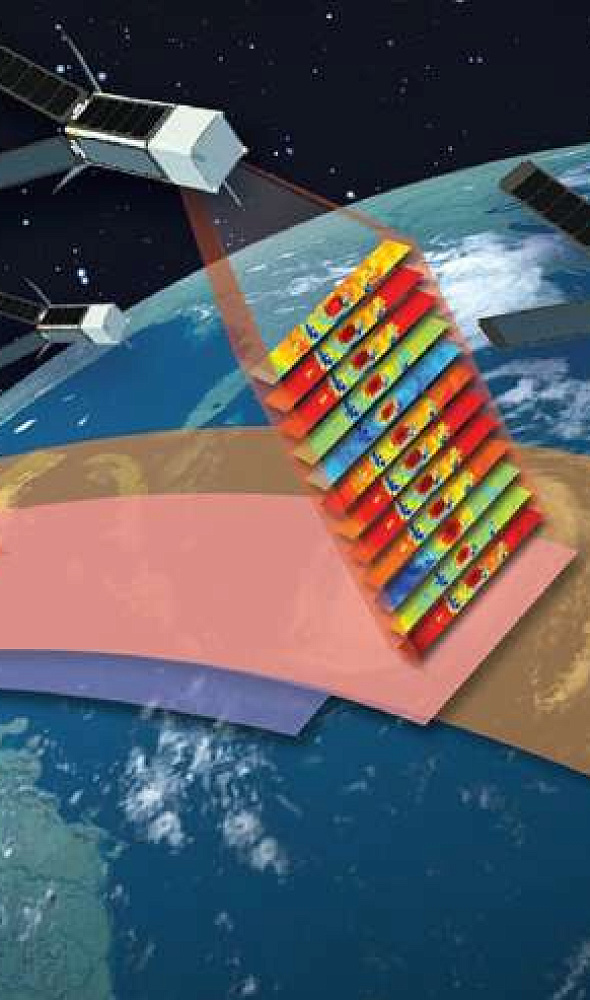
Satellite synthetic aperture radar (InSAR) is described in the source as a means of monitoring terrain stability and geological hazards, including for pipeline safety. Interferometry provides continuous tracking and a wide field of view that ground images do not have.
Satellites, GNSS, RS and 3D/4D seismic exploration make it possible to detect reserves with fewer exploratory wells. Satellite SAR — search for slicks, hydrocarbon leaks, oil and gas seeps.
An example sensor in the text is WorldView-3 from DigitalGlobe: high spatial and spectral resolution in VNIR (vegetation) and SWIR (minerals). Underground hydrocarbon leaks change soil chemistry and vegetation health. UAV provides detail for 3D seismic planning.
Exploration costs when several satellite images are combined are, in the text, reduced 5 times for unexplored territories and 7 times for previously studied sites — relative to traditional methods, not as an INNOTER price list.
5
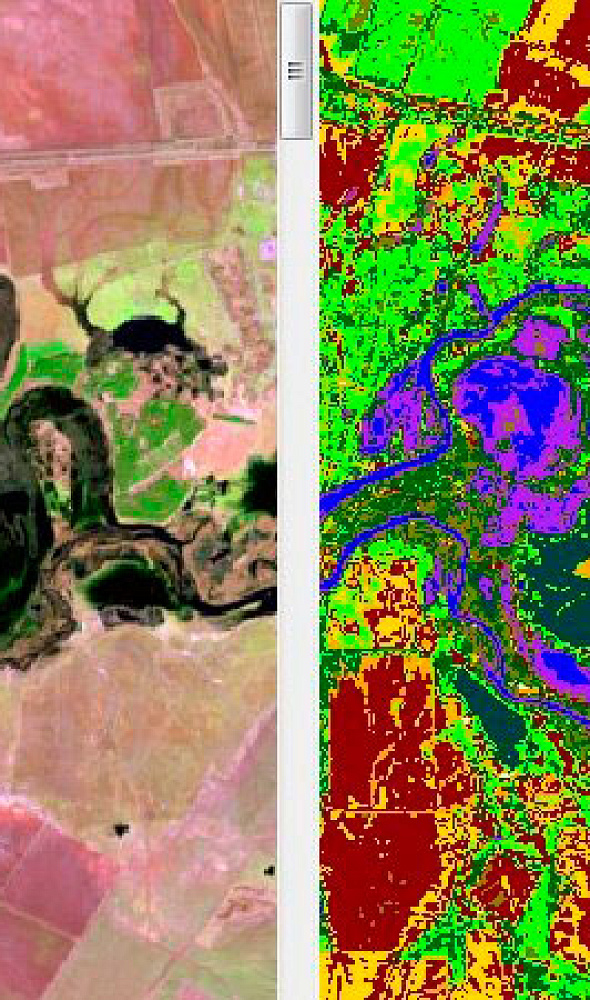
Optical multi- and hyperspectral sensing is used to monitor soil pollution in vegetated areas: from vegetation biochemistry, crude oil and petroleum products from leaks and improper decommissioning of production are detected. The methods are applied with field spectroradiometers and on airborne/satellite images; the text notes that further research is still needed for operational use, including for future hyperspectral satellites.
Airborne and satellite radar are used to detect oil slicks at sea: an oil layer dampens capillary waves. The source mentions polarimetry, X and L bands, relative thickness assessment and the Spill Watch procedure for slick drift.
The NEPU-OWOD V1.0 dataset: 1192 oil wells on 432 high-resolution images over the city of Daqing (China's largest field); a comparison of nine deep-learning models for automatic well detection.
6
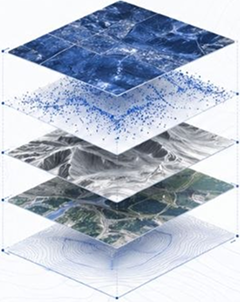
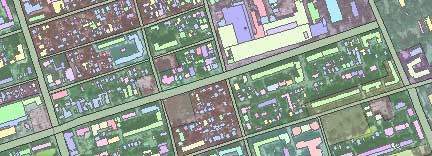
The objectives block specifies thematic mapping of the oil and gas industry, including vector thematic layers in GIS. In addition to the scales from the result cards:
- geological exploration: topographic maps of development territories, photogeological maps, maps of neotectonic movements, of optimal well placement
- field development: RS data at work stages, topographic maps with existing and planned objects at scale 1:10 000 – 1:25 000, satellite monitoring of construction and changes on licence blocks
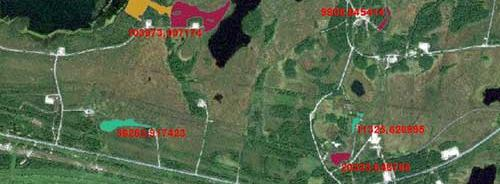
- ecology: inventory and documentation of polluted lands and waters, assessment of environmental damage in emergencies, assessment of anthropogenic impact
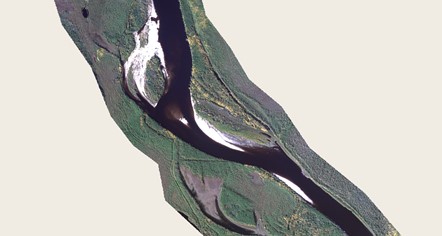
Image examples in the card: Ras Tanura refinery, WorldView-3 © DigitalGlobe; GeoEye-1 © DigitalGlobe; Samotlor field, Aist-2D, survey of 25.05.2018.
7
Very-high- and high-resolution satellite survey data are obtained faster if the frames are already in the operator's archive; a new survey does not require approvals from the competent authorities. The area of one satellite frame is significantly larger than an image from an aircraft or UAV.
Materials from an aircraft or UAV have high visual information content and metric properties, but take more time: a flight permit, relocation of the platform and operators, and a several times higher cost per 1 km².
In the text on RS advantages, a 10–30% reduction in operating costs is stated when GIS and geodata are integrated. Separately: GIS has been used in the industry for more than 20 years; government support for GIS infrastructure and access to spatial data is named as a condition for development.


Frequently asked questions
Answers to key questions about service parameters, timelines, deliverable formats and workflow. If you did not find what you need — contact us and we will help.
The oil and gas complex is a set of production, technical and organizational structures engaged in prospecting, production, transportation, processing and sale of oil and gas. This complex includes many companies engaged in various activities related to the oil and gas industry, such as geological exploration, well drilling, exploration and production of hydrocarbons, processing of raw materials, transportation of oil and gas through pipelines and tankers, sale of petroleum products and many others.
The oil and gas complex is an important component of the economies of many countries around the world and plays a key role in the energy security of many nations. However, the oil and gas complex is also one of the most polluting industries, which leads to serious environmental problems and causes the need to reduce the harmful impact on the environment as part of sustainable development.
The oil and gas complex in russia is one of the main sources of economic growth and employment. Russia has huge oil and gas reserves and is one of the largest producers and exporters of these resources in the world.
The oil and gas complex in Russia includes such companies as Gazprom, Rosneft, LUKOIL, Tatneft and many others. These companies are engaged in various stages of the oil and gas production, refining and sales chain.
The Russian oil and gas complex also has a significant impact on the geopolitical situation in the world, as Russia is one of the main suppliers of oil and gas to Europe and other parts of the world.
However, the Russian oil and gas complex also faces a number of challenges such as outdated equipment, low production efficiency, high dependence on exports and negative environmental impact. In recent years, Russian companies have been actively working to address these problems and introduce modern technologies into production.
Gazprom is the largest company not only in the Russian oil and gas complex, but also in the global gas industry. In Russia, Gazprom's share in the oil and gas industry is also significant. It accounts for more than 70% of natural gas production and more than 15% of oil production. In addition, Gazprom transports and stores gas, as well as produces and sells petroleum products. Gazprom's share in Russia's oil and gas industry continues to grow thanks to investments in the development of new projects and modern hydrocarbon production and processing technologies.
The Russian oil and gas sector is one of the largest in the world and serves as a key source of economic growth and prosperity in the country. The development of Russia’s oil and gas industry includes the following main directions:
-
Extraction and production. Russia is one of the world’s largest producers of oil and gas, and the government continues to invest in the extraction and production of these resources. An important factor in the development of Russia’s oil and gas sector is the modernization and expansion of the production base, as well as the introduction of new technologies to increase efficiency and reduce environmental impact.
-
Transportation and storage. Russia has an extensive system for transporting and storing oil and gas, including not only pipelines but also marine terminals, ports, ships, and tankers. Further development of transportation and storage infrastructure is a key factor in increasing oil and gas production and export volumes.
-
Refining and distribution. Russia continues to expand its capabilities in refining oil and gas into highly efficient fuel and chemical products. The country is also actively engaged in exporting oil and gas to global markets and developing new sales markets, particularly in Asia.
-
New technologies. Russia is also actively developing new technologies for the extraction, production, and refining of oil and gas, including the use of deepwater deposits and secondary recovery of oil wells. Additionally, efforts are being made in Russia to develop renewable energy sources, such as wind and solar energy.
Overall, Russia continues to develop its oil and gas sector by focusing on modernizing and expanding its production base, improving transportation infrastructure, increasing production and export volumes, and implementing new technologies to enhance efficiency and reduce environmental impact.
One of the key directions in the development of Russia’s oil and gas industry is increasing the share of natural gas in the country’s energy balance. Natural gas is a cleaner fuel, and its extraction and utilization are more efficient in terms of profitability.
Another important factor in the development of Russia’s oil and gas sector is participation in international projects for oil and gas extraction and transportation, such as "Nord Stream 2" and "TurkStream." These projects contribute to strengthening Russia’s economic ties with other countries and ensuring stable demand for Russian gas in global markets.
Finally, a crucial aspect of the development of Russia’s oil and gas industry is the sustainability and reliability of production and exports. To achieve this, the government continues to improve technologies and safety standards, develop infrastructure, and implement environmental protection measures. Only in this way can Russia maintain its leading position in global oil and gas markets and continue its growth in the future.
The state policy in Russia’s oil and gas industry holds strategic significance for the country’s economy. The government actively participates in managing the industry, using various tools and mechanisms for its development and regulation. State policy in the oil and gas sector includes measures such as setting tax rates, licensing activities, ensuring compliance with environmental regulations, and supporting innovation and technological development.
An important element of state policy in the oil and gas industry is the support of national companies such as Gazprom and Rosneft, which play a key role in the country’s economy. State support includes providing loans and benefits, facilitating deals and contracts, and ensuring stability in the domestic market.
Looking forward, the use of GIS in the Russian oil and gas industry will continue to grow. Russian oil and gas companies will continue to invest in the development of GIS technology to improve production efficiency and save costs.
The first steps in the use of GIS in the Russian oil and gas industry were made more than 20 years ago, and since then this technology has become an indispensable part of the Russian oil and gas complex.
Government support is also important for the development of GIS in the Russian oil and gas industry. The government can help develop GIS infrastructure and provide access to the spatial data necessary for the successful operation of oil and gas companies.
The oil and gas complex plays a huge role in the macroeconomic sphere of Russia. It is one of the main sectors of the economy, which makes a significant contribution to the country's budget and creates jobs for millions of people.
In 2020, the share of the oil and gas sector in the export of goods amounted to about 50%, which shows the importance of this industry for the country's economy. Revenues from oil and gas exports account for a significant part of Russia's budget and ensure the country's financial stability.
It is also an important factor in Russia's foreign trade balance. Russian oil and gas companies are among the largest exporters of these resources in the world, which provides the country with a high level of export revenues.
An important macroeconomic significance of the oil and gas complex is also the inflow of foreign investment into Russia. Many large international companies invest in the Russian oil and gas industry, which ensures the development of infrastructure and technological processes.
In general, the oil and gas complex is one of the main driving forces of the Russian economy, which emphasizes its importance for the country and the need to develop and modernize this industry.
The oil and gas complex of Russia is a branch of the economy that includes the extraction, transportation and processing of oil and gas. This industry is one of the main industries in the Russian economy and has a significant contribution to the country's budget.
The structure of Russia's oil and gas complex includes the following parts:
Oil and gas production is the main part of the oil and gas complex. This part includes oil and gas production at the fields and their subsequent transportation.
Transportation - oil and gas are transported through oil pipelines, gas pipelines and railroad transportation systems.
Oil and gas refining - this part includes the processing of oil and gas at various refineries that produce gasoline, diesel fuel, gas and other products.
Service companies - these are companies that provide services in the oil and gas industry, such as exploration, well drilling, engineering and consulting services, etc.
Petrochemical complex - production of chemical products based on oil and gas.
Energy complex - production of electricity based on oil and gas.
Over the past six years, the Russian oil and gas industry has faced several challenges. Despite an increase in reserves, major companies in the sector, such as Gazprom, are forced to develop new policies to maintain their competitiveness in the long term.
News published on the gas company's website indicates that state policy aimed at supporting overall investment in the oil and gas sector, despite certain obstacles, is beginning to show initial results.
One of the main issues facing Russia’s oil and gas industry concerns gas reserves and their utilization. Although the Russian oil and gas sector remains one of the largest in the world, this issue requires greater attention from both companies and the government.
The current challenges of Russia’s oil and gas sector may include the following:
-
Low production efficiency — many enterprises operate with outdated equipment and technologies, leading to reduced production efficiency and increased costs. One of the key problems of the Russian oil and gas sector today is its lag in refining processes. For example, the oil refining depth in the United States is nearly 97%, compared to 79% in Russia.
-
Shortage of qualified personnel — the industry requires skilled specialists; however, there is currently a shortage of such professionals in Russia.
-
Negative environmental impact — oil and gas extraction can harm the environment, as it is associated with the emission of harmful substances, as well as soil and water pollution.
-
Export restrictions — due to sanctions and limitations imposed by other countries, Russia may face restrictions on oil and gas exports, which could lead to decreased revenues for enterprises.
-
Declining demand for oil and gas — falling prices on global oil and gas markets and the transition to more environmentally friendly energy sources may reduce demand for oil and gas, potentially affecting corporate revenues.
-
Need for infrastructure modernization — the existing infrastructure in Russia requires modernization and development to improve production efficiency and safety.
-
Influence of geopolitical factors — changes in global politics and international relations can affect oil and gas exports and demand, potentially negatively impacting companies in the industry.
The oil and gas sector is a crucial part of the economy in many countries, and its structure and organization can vary significantly from one country to another. Below are several examples of oil and gas sectors in different countries:
- USA: The U.S. oil and gas sector is one of the largest in the world. It includes numerous independent oil and gas companies engaged in the extraction and refining of hydrocarbons, as well as many technology and service companies that support production activities. The U.S. is also a major exporter of oil and gas.
- Saudi Arabia: Saudi Arabia is the world's largest oil producer and has a monopoly on oil extraction and export through the state-owned company Saudi Aramco. The sector encompasses not only extraction but also a wide range of activities, including oil sales, petroleum product manufacturing, and oil transportation infrastructure.
- Norway: Norway's oil and gas sector is one of the most developed and innovative in the world. Key companies, such as Equinor, are engaged in oil and gas production as well as the development of new technologies and extraction methods that can be applied in other regions. Additionally, Norway actively invests in renewable energy sources, such as wind power.
- China: China’s oil and gas sector is also among the largest in the world. As the world's largest energy consumer, China actively invests in the development of its oil and gas industry to meet domestic energy demands. The Chinese oil company PetroChina is involved in oil and gas extraction, refining, and distribution, as well as the development of new deposits both within China and internationally.
- Netherlands: The Netherlands has a long history in the oil and gas industry and is the largest natural gas producer in Europe. The country actively utilizes its oil and gas sector to develop new technological solutions and promote renewable energy sources.
These are just a few examples of oil and gas sectors in different countries, each with its own unique characteristics and challenges. However, in general, the oil and gas industry remains a vital source of energy for many nations and a significant player in the global market.
The oil and gas industry is one of the most important areas of the economy of many countries, including Russia. It influences many other industries and activities that depend on oil and gas.
One of these spheres is transportation. Oil and gas pipelines and pipelines are the primary means of transporting oil and gas throughout the country and beyond. In addition, the oil and gas industry also affects the automobile and aviation industries because oil and gas are used to produce fuel.
Another important area is the energy industry. The generation of electricity from oil and gas is one of the main sources of energy in many countries including Russia. In addition, the oil and gas industry influences the production of petroleum products such as plastics, lubricants and chemicals that are used in many industries including construction and agriculture.
It should also be mentioned that the oil and gas industry affects economic stability and market prices in various countries. A drop in oil and gas prices can lead to economic problems and lower revenues for a nation that depends on the export of these resources.
Overall, the oil and gas industry is an important and widely dependent area that affects many other sectors of the economy and people's lives.
It is an important tool in the oil and gas industry. It provides information about oil and gas fields and the state of the natural environment in the regions where production takes place.
It can be used to obtain data on the geological structure of fields, determine the depth of oil and gas reservoirs, and identify zones of possible faults and fractures. This helps to improve the efficiency of field exploration and increase oil and gas production.
In addition, it is used to monitor the environmental situation in the regions where oil and gas production is carried out. Satellite images can be used to monitor pollution of the atmosphere, water and land resources, as well as to control the efficiency of emergency response measures at oil and gas facilities.
Thus, it is an important tool in the oil and gas industry to improve the efficiency of field exploration and control over the environmental situation in oil and gas production regions.
The oil and gas industry is one of the oldest industries. It is known that the first oil field was discovered in the Chinese Empire as early as the 3rd century BC, and the first commercial oil wells were drilled in the United States in 1859. More than 160 years of oil and gas development have passed since then, and the oil and gas industry continues to evolve and adapt to changing market conditions and technological advances.
The oil and gas industry in Russia also has a long history. The first oil fields were discovered many years ago, on the territory of the Russian Empire in the 19th century. However, the intensive development of the oil and gas industry in Russia began many years later, in the second half of the 20th century, after the largest oil and gas bearing province of Western Siberia was discovered. Many years have passed since then, and during this time the oil and gas industry in Russia has made significant progress, becoming one of the main sectors of the country's economy.
Space-based monitoring tools play a crucial role in addressing various challenges in the oil and gas industry. Among the most important tasks that can be solved using space monitoring, the following can be highlighted:
-
Field monitoring: Satellite imagery allows tracking changes in geological structures, identifying new deposits, as well as monitoring geological processes and crustal deformations.
-
Well operation control: Satellite images enable monitoring environmental changes, including water and soil pollution, as well as landscape alterations and land use.
-
Detection of oil and gas leaks: Satellite imagery can detect and track oil and gas leaks at extraction sites and along transportation routes.
-
Transportation optimization: Space monitoring allows controlling pipeline conditions and optimizing their usage, improving the efficiency of oil and gas transportation.
-
Climate change monitoring: Satellite data can track climate changes and predict their impact on the oil and gas sector.
These tasks are essential for the efficient operation of the oil and gas sector, and space monitoring plays a vital role in their resolution.

Need satellite imagery or help choosing the right data?
Describe your task, area of interest, and desired outcome. We will check data
availability, assess new acquisition options, and propose the optimal solution in terms of timelines, cost,
and quality.
Discuss the project
clients who trust us
25+ years in the geodata market