
Emergency maps, damage assessment and evacuation models from an archive or a new RS survey.
Search the site
What the service is used for
Situational awareness
Distributed spatial information online: assessment of hazardous facilities and territories in risk zones; the basis is a GIS-RS database.
Emergency mapping
Support of the response phase: natural disasters and humanitarian crises; imagery and processing methods in the emergency operating scheme.
Infrastructure and supply
Facility monitoring, early warning, shelters, supply distribution, impact on roads, bridges and buildings.
Floods and landslides
Forecast and monitoring with SAR radar and UAV LiDAR; change detection for flood mapping.
Search and spills
Search for objects in distress; geospatial assessment of oil-product spills and 3D city maps.
Need emergency monitoring?
Describe the territory and the event type. A specialist will select the RS archive, SAR or optics and the set of maps.
Solutions for emergency monitoring
01
Situational awareness
Distributed spatial information online: assessment of hazardous facilities and territories in risk zones.
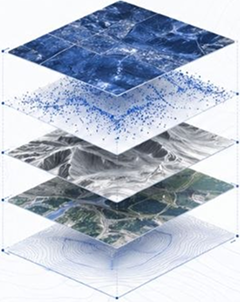
The basis of the emergency management system is a GIS-RS database. Emergency services supplement existing geodata with situation details. The survey composition and processing methods depend on the disaster type and the cycle phase: mitigation, preparedness, response, recovery.
What you get
- GIS layers for the agreed territory and dates
- assessment of the condition of facilities and territories in the risk zone
- materials for operational headquarters and response services
The layer set, survey dates and frequency are fixed in the terms of reference; archive availability and cloud cover affect coverage.
02
Flood mapping
Flood maps from SAR radar and UAV LiDAR: change detection and flood-forecast models.
Synthetic aperture radar images are used for flood mapping. Synthetic aperture radar (SAR) images make it possible to map flood zones even under cloud cover. Combined use of SAR and LiDAR helps refine flood boundaries and form data for flood-forecast models.
What you get
- flood contours for the agreed dates
- materials for forecast models and flood management
- if agreed — a combination of SAR and LiDAR survey
Detection accuracy depends on the scene, terrain, built-up area and the availability of SAR and LiDAR.
03
Fires and UAV monitoring
Forest-fire observation: RGB and thermal cameras, temperature sensors and data transmission to the receiving station.
UAVs with RGB and thermal cameras make it possible to observe fire seats, assess their spread and obtain detailed data for selected territories. Natural and anthropogenic factors may be taken into account when assessing fire hazard.
What you get
- observation materials of the selected site per the agreed regime
- if agreed — local-scale fire-hazard maps
- data for response services and protection planning
The flight regime, sensors and coverage depend on weather, permits and the terms of reference.
04
Damage assessment and 3D city
Rapid assessment of buildings in the risk zone from satellite and aerial images; 3D models of complex objects and hard-to-access areas.
RS data are applied at the stages of post-disaster response, damage assessment, recovery and mitigation. For earthquakes and eruptions — analytics from optics, radar and hyperspectral data. Separately: geospatial assessment of oil-product spills and search for objects in hard-to-access places and water areas.
What you get
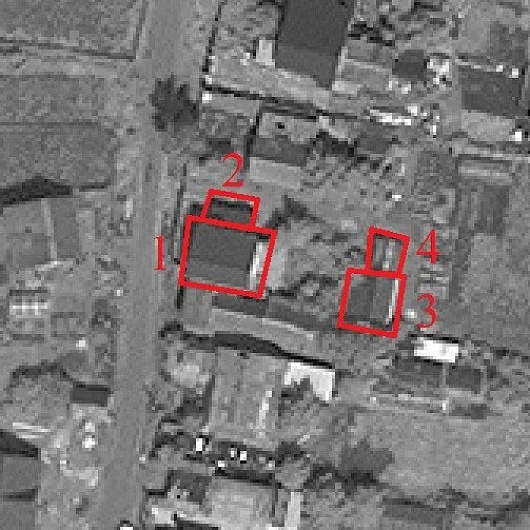
- assessment of building and infrastructure damage for the agreed dates
- if agreed — a 3D model of the site or object
- layers for object search and spill assessment
The detail of the assessment depends on survey resolution, cloud cover and the availability of stereo or radar data.
05
Risks, evacuation and recovery
Risk and recovery maps (RRM) over weeks and months: image comparison, vulnerability of people and buildings, evacuation tracks.
Pre-disaster terrain mapping provides a thematic basis for civil defence. Models of evacuation-centre placement (schools, hospitals, fire stations) and navigation tracks. Multi-date images make it possible to assess territory changes before and after an emergency, map risk zones and prepare materials for recovery and civil defence. Evacuation schemes and placement of emergency-aid centres can be formed from geodata.
What you get
- thematic change maps for the agreed period
- materials for humanitarian-aid and civil-defence planning
- if agreed — evacuation schemes and centre placement
The timeline and set of risk and recovery maps depend on the territory, availability of multi-date images and the requirements of the terms of reference.
How the work goes
Real projects — real results
We solve complex challenges using advanced technologies and expertise in geospatial data.


Cost and timeline
The cost and timeline of emergency monitoring depend on the event type, territory, period and the set of RS maps.
- area and task: situational awareness, emergency mapping, infrastructure, floods, fires, damage assessment or recovery
- data type: satellite imagery (optics and SAR radar), UAV and LiDAR; archive or new survey
- period: operational response or a retrospective for risk and recovery maps
The cost of the work is calculated individually
Timelines depend on the area, survey type and product composition
The final estimate is agreed after the territory and the map set are described
What is needed for a quote
To agree the terms of reference for emergency monitoring, provide:
- task: awareness, emergency mapping, floods, fires, damage assessment, evacuation or recovery
- area of interest — outline, region, water area or SHP file
- period: operational control, specific event dates or a retrospective
- whether you have your own images or need archival / new satellite imagery, SAR, UAV and LiDAR
- whether flood maps, 3D city models, evacuation tracks, building assessment or object search are needed
- requirements for the format of maps and layers, if they are already known
If survey parameters have not been set yet, describing the territory and the event type is enough — specialists will propose the RS data composition.
Describe the outline and the task — we will clarify the archive, new survey and the set of maps.
Why Innoter
Prompt access to archives
Suitable archive imagery can be obtained faster when the required area and date are already available from operators.
No aviation clearances
A new satellite survey does not require the flight clearances typical of aerial surveys.
Large and remote areas
A single satellite pass covers large areas and makes it possible to work in hard-to-reach regions.
Direct agreements with operators
Distribution agreements help select archive imagery and order new surveys from different providers.
Software and server infrastructure
Modern software and computing capacity for quality control and processing of large data volumes.
Experienced specialist team
Years of experience on complex projects and specialists in cartography, photogrammetry and remote sensing.
RS data, emergency-cycle phases and monitoring scope
The composition depends on the disaster type, archive or new survey, SAR or optics and map requirements.
1
An emergency is a sudden or prepared situation at local, regional or continental levels of the Earth that threatens people or a territory: an accident, a hazardous natural phenomenon, a catastrophe, the spread of disease, a natural or other disaster with casualties, harm to health and the environment, material losses and disruption of livelihoods.
Emergencies are classified by nature, area of occurrence, scale and extent of damage. By sources: natural, technogenic, environmental, biological-social and medical. Sphere and nature: terrorist, humanitarian, natural, technogenic.
2
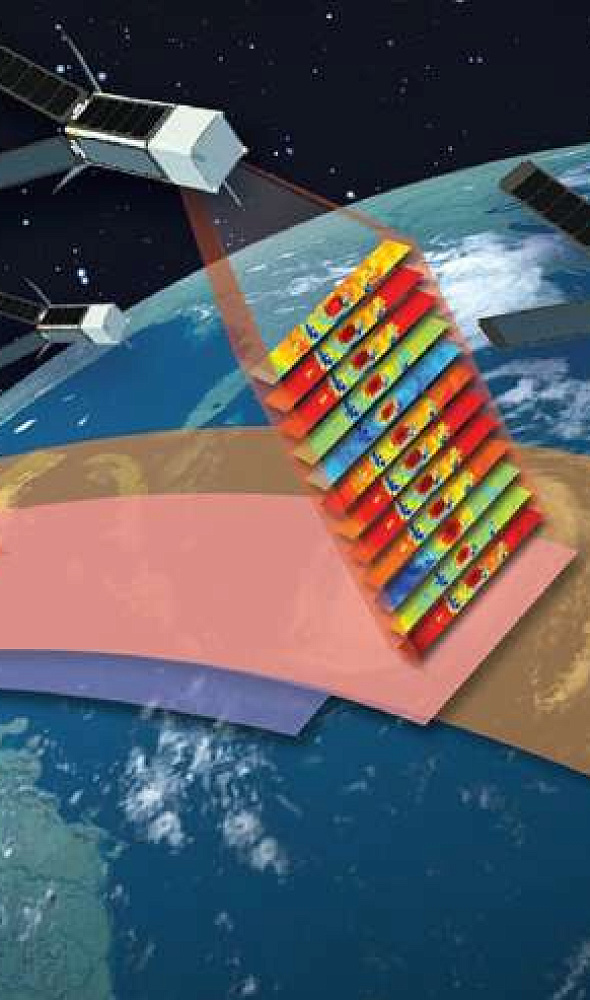
An integrated multi-level scheme of RS techniques and technologies covers most tasks that arise in emergencies. Spatio-temporal information is needed at all cycle phases: mitigation, preparedness, response and recovery.
The emergency-rescue sector is qualified personnel and resources for prevention, preparedness, response and recovery. According to a Mordor Intelligence forecast, the global incident and emergency management market was expected to reach $174.5 billion by 2027.
3
Situational awareness: distributed spatial information online, assessment of hazardous facilities and territories in risk zones; the basis is a GIS-RS database. Emergency mapping at the response phase: natural disasters and humanitarian crises; for the main disaster types — suitable images, characteristics and processing methods.
Infrastructure monitoring: early-warning signals, safe shelters, supply distribution, impact on roads, bridges and buildings. RS at post-disaster stages: damage assessment, recovery and mitigation. Response to large-scale floods and landslides: forecast models, radar satellites and UAV LiDAR; SAR — flood mapping by change detection. Models of evacuation-centre placement and navigation tracks. City mapping, including 3D of complex objects. Spatially referenced video surveillance. Analytics of earthquakes and volcanoes from optics, radar and hyperspectral data. Assessment of oil-product spills. Search for accident objects in hard-to-reach places and water areas.
4
Data on hard-to-reach areas are obtained in the office: less field work; continuous ground survey (tacheometry, levelling) requires large time and cost and is hard to synchronise across sites. Images of different resolution — from distributed flood and fire data to detailed data on destroyed buildings; data on a large area are accumulated in a short time, almost an instantaneous snapshot.
A satellite image reflects the terrain condition at the time of the emergency survey; the image area is not tied to boundaries, and local-authority permission is not required to obtain it. Many RS data are commercially available for assessment models with subsequent detailing. GIS is a preparedness element: damage modelling, hypothetical scenarios, use in daily work and drills. For hurricanes and storms RS gives time for evacuation and dam reinforcement; monitoring is close to online. After earthquakes — localisation of the most damaged areas and identification of unsafe buildings.
5
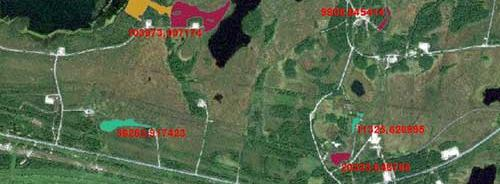
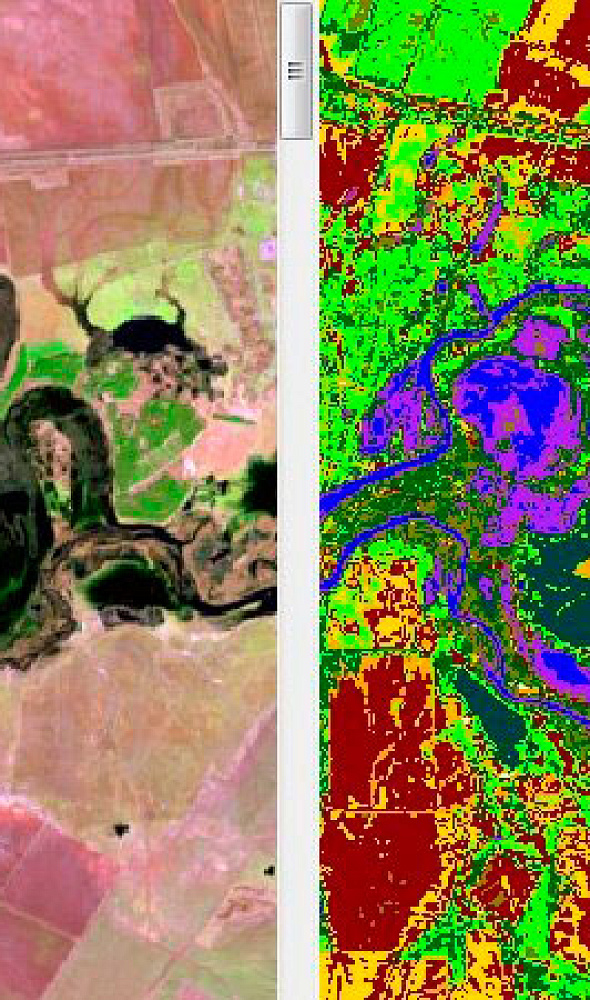
Near-real-time RS data on flood extent are used for flood management and as observations for forecast models. The task is to identify the extent of urban floods from SAR and LiDAR data. Solution: high-resolution SAR sensors; combining SAR data with hazard maps from LiDAR survey.
Result of the described method: SAR improves model forecasts; hazard maps after the SAR pass refine the assessment of urban floods. Assessment for rural areas adjacent to the city only: mean detection accuracy 94%, false-alarm rate 9% in urban areas. In the study the results were compared with aerial photography of the Tewkesbury area and a section of the River Severn.
6
Risk and recovery mapping (RRM) — maps and analyses over weeks or months for reconstruction, risk reduction, preparedness and prevention. Comparison of images from different dates gives a quantitative and qualitative assessment of change. One RRM application example is mapping of territory change in Haiti for 2010–2014. Purpose of the maps: to help planners and civil defence.
UAVs for forest fires: RGB and thermal cameras, temperature sensors, communication modules, autonomous take-off and landing, trajectory planning. Local hazard maps (Andalusia): natural factors (fuel models, slopes, vegetation moisture) and anthropogenic (proximity to massifs, human access); comparison with REDIAM burned-area maps, dates 14.01.2013 and 25.07.2013.
Automated extraction of flood and fire data: ingest and preprocessing pipelines, operator review. Examples of automated mapping include flood consequences in Ivanovka and Petropolis.


Frequently asked questions
Answers to key questions about service parameters, timelines, deliverable formats and workflow. If you did not find what you need — contact us and we will help.
Emergencies are off-normal events that arise as a result of natural or technogenic processes as well as human actions. They can lead to casualties, large material and environmental damage, and the creation of hazardous zones.
In recent years many emergencies have occurred in Russia related to various causes such as floods, fires, accidents at hazardous facilities, terrorist attacks and others. They have different character and can have large-scale consequences.
To respond to emergencies, Russia has a system of emergency prevention and response consisting of several levels. At the federal level EMERCOM and Roshydromet operate, tracking the situation in real time and warning the population of possible threats.
If an emergency occurs, constituent entities of the Federation must take measures to respond to the consequences and protect the population. Various organisations and structures are used for this, such as firefighters, medical staff, rescuers, police and others.
In addition, there is a classification of emergencies by types and sizes that helps determine the scale of consequences and the necessary response measures. Measures are also taken to protect the environment in order to prevent its pollution and preserve public health.
It is important to note that emergencies are unpredictable events and cannot always be prevented. However, a correct response to an emergency can significantly reduce damage and save lives.
Some examples of emergencies:
- Natural disasters such as earthquakes, floods, hurricanes, tornadoes and forest fires.
- Technological accidents, for example industrial explosions, accidents at nuclear plants or accidents on oil platforms.
- Epidemics and pandemics such as COVID-19.
- Terrorist acts, for example attacks on public places or transport.
- Wars and conflicts, including civil wars.
- Mass unrest and civil disturbances.
In each case it is important to have an action plan and to prepare for emergencies in order to reduce the risk of negative consequences and ensure the safety of people and property.
Various emergencies occur in Russia that may be caused by natural disasters, technogenic accidents, epidemics and other causes. Some examples of such situations:
- Natural disasters such as earthquakes, floods, forest fires and tornadoes. In 2021 large forest fires occurred in Russia that covered territories in several regions of the country, including Siberia, the Urals and the Far East.
- In 2018 a major earthquake occurred in Kamchatka Krai.
- Technogenic accidents, for example accidents at nuclear plants or transport accidents. In 1986 the Chernobyl NPP saw the largest nuclear disaster in history, which had serious consequences for people's health and the environment.
- Epidemics and pandemics. In 2020 a COVID-19 pandemic was declared in Russia, which led to significant changes in people's lives and the country's economy.
- Major industrial accidents. In 2020 an accident occurred at Norilsk CHPP-3 in Krasnoyarsk Krai, as a result of which a large amount of fuel was discharged into a river.
- On 15 September 2022 the consequences of powerful typhoon Hinnamnor in Primorsky Krai, which arrived in the region on the evening of 4 September, were recognised as a federal-level emergency. The rains it caused flooded 991 houses and 1,072 household plots and damaged 34 bridges. Three people died. According to a preliminary estimate, weather-related damage exceeds three billion roubles.
Classification of emergencies is an important tool for determining the scale and degree of hazard of occurring events and for developing the necessary measures for response and protection of the population.
Several types of emergency classification exist in Russia. Let us consider some of them:
- By scale and degree of hazard:
- Emergencies of local significance — arise on the territory of a specific settlement or facility and have a local character.
- Emergencies of regional significance — occur on the territory of a region and may cover several settlements.
- Emergencies of federal significance — arise on the territory of several regions or the entire country and are large-scale events that can have a serious impact on the economy and society.
- By causes:
- Natural emergencies — arise as a result of natural disasters such as earthquakes, floods, tsunamis, etc.
- Technogenic emergencies — caused by technogenic processes and accidents at hazardous facilities, such as accidents at nuclear power plants, oil platforms, etc.
- Social emergencies — related to the human factor, such as terrorist attacks, mass unrest, etc.
- By degree of hazard to the population and the environment:
- Category I emergencies — pose an immediate threat to the life and health of the population and also cause significant environmental damage.
- Category II emergencies — pose a certain threat to the life and health of the population and may also cause damage to the environment.
- Category III emergencies — do not pose an immediate threat to the life and health of the population, but may lead to damage to the economy, production and the environment.
Natural emergencies arise as a result of natural phenomena such as earthquakes, floods, tsunamis, forest fires and others. Technogenic emergencies are related to human actions and occur as a result of accidents at industrial facilities, transport incidents, technogenic catastrophes and other similar events.
The third classification of emergencies is based on the hazard they pose to people and the environment. Emergencies can be divided into two groups: hazardous and non-hazardous. Hazardous emergencies can cause serious harm to people's health and life, the environment, property and facilities; non-hazardous emergencies have less serious consequences.
Classification of emergencies is important for determining the strategy and tactics of response, as well as for taking the necessary measures to prevent emergencies. In Russia, classification of emergencies is a component of the civil-defence system and of planning measures to protect the population and facilities in extreme situations.
Emergencies can arise for various reasons, including natural phenomena. Classification of emergencies by nature of origin includes the following types:
-
Fires. This may be a forest, peat, technogenic fire or a fire in a residential or public building.
-
Floods. The water disaster may be caused by rains, rivers, glaciers or a tsunami. As a result, people, settlements and infrastructure may be affected.
-
Earthquakes. This is a natural phenomenon that causes oscillations of the Earth's surface. It can lead to destruction of buildings, roads and bridges, as well as to injuries and loss of life.
-
Cyclones and hurricanes. These are powerful wind phenomena that may be accompanied by heavy rain, floods and other types of natural disasters. They can cause major damage to cities, seaports and other infrastructure facilities.
-
Natural disasters. These include various natural phenomena such as drought, rockfalls, landslides, tornadoes, hail, avalanches and others. They can cause destruction and threaten people's life and health.
Classification of emergencies by scale is a system of dividing emergencies into groups depending on their impact on people, property, the environment and public infrastructure. Classification by scale includes the following types of emergencies:
-
Emergencies of local significance are emergencies limited to the territory of a municipality or part of a city and affecting a relatively small number of people and property.
-
Regional emergencies are emergencies affecting several municipalities within one region or part of a region's territory. They can affect a larger number of people and property.
-
Emergencies of federal significance are emergencies that cover several regions or the entire territory of the country. They can cause serious consequences for people's life and health, infrastructure, the environment and the economy.
-
International emergencies are emergencies that cover the territories of several countries. Such emergencies may include, for example, diseases that spread globally or disasters that affect several countries.
Classification of emergencies by scale helps assess potential threats and determine the necessary precautions to protect people and property depending on the scale of a possible disaster. It also makes it possible to determine the scale of emergency-response operations and coordination of actions between the relevant authorities and emergency services.
Classification of emergencies by causes includes the following types:
- Natural disasters: related to natural phenomena such as earthquakes, floods, tsunamis, hurricanes, typhoons, forest fires, severe weather (strong wind, hail, heavy rain, snowfall, etc.).
- Technogenic accidents: caused by human activity, such as accidents at hazardous industries (chemical, oil-refining, nuclear, etc.), transport accidents (road, railway, air and water routes) and other accidents related to the use of technologies.
- Socio-economic crises: arise from social and economic causes such as company bankruptcies, shortage of resources (water, electricity, food, etc.), mass strikes and protests, political conflicts, wars, terrorist acts, etc.
- Biological crises: related to the spread of infectious diseases, pandemics, epidemics, mass food poisoning and other biological causes.
- Causes unknown: when the cause of the emergency cannot be established or remains unknown.
Classification of emergencies by scale is determined by the number of people affected and the geographic zone of impact. The following scale categories of emergencies are usually distinguished:
-
Local emergencies. These are events occurring in a limited territory and affecting a limited number of people and facilities. Examples may include fires in residential buildings, accidents on roads or at large industrial enterprises.
-
Regional emergencies. These are events covering several settlements or regions and affecting a significant number of people and facilities. Examples may include floods, droughts or forest fires affecting several districts or regions.
-
National emergencies. These are events affecting a large part of the country's territory and causing serious problems for its population and economy. Examples may include natural disasters such as earthquakes or hurricanes, as well as major technogenic catastrophes.
-
International emergencies. These are events that cover several countries or regions and require joint efforts of the international community to address them. Examples may include pandemics, global environmental disasters or terrorist acts affecting several countries.
Classification of emergencies by duration may be as follows:
-
Short-term emergencies — those lasting no more than 24 hours. For example, emergency road closure, a brief power outage, short-term floods, etc.
-
Medium-term emergencies — those lasting from 24 hours to several days. For example, inundation of a territory, a fire at an industrial facility, a transport accident that delayed traffic for several days, etc.
-
Long-term emergencies — those lasting more than several days or weeks and that may continue for several months or even years. For example, an epidemic, a flood, a drought, a crop disease, etc.
Classification of emergencies by duration makes it possible to determine the measures needed for prevention and response and to assess possible economic and social consequences.
Classification of emergencies by spread rate is determined by how quickly an emergency can spread and lead to negative consequences. This can be an important criterion when developing emergency prevention and response plans.
-
Instantaneous emergencies — those that occur suddenly and can lead to negative consequences within seconds or minutes. Examples include earthquakes, explosions, fires, severe storms, terrorist attacks, etc.
-
Fast-spreading emergencies — those that can spread over several hours or days and lead to negative consequences over a wide radius. Examples may include forest fires, epidemics, droughts, floods, strong winds, etc.
-
Slow-spreading emergencies — those that can spread over days, weeks or even months, but whose consequences may be significant. Examples include vegetation diseases, water or soil pollution, climate change, etc.
Classification of emergencies by suddenness may include the following categories:
-
Predictable emergencies — events that can be forecast in advance and for which prevention or mitigation measures can be taken. Examples may include hurricanes, floods, droughts, forest fires and other natural phenomena.
-
Unpredictable emergencies — events that cannot be forecast in advance and occur suddenly. Examples may include earthquakes, tornadoes, explosions and other technogenic emergencies.
-
Combined emergencies — events that are a combination of predictable and unpredictable emergencies. Examples may include natural disasters such as earthquakes that can cause floods and landslides.
Classification of emergencies by suddenness helps determine what measures should be taken to prevent and respond to emergencies and to mitigate their consequences.
Forecasting of emergencies by specialised services is important because it makes it possible to prepare for a probable hazard, issue a timely warning to the population and EMERCOM bodies, plan competent response actions, minimise losses, avoid accidental casualties and sometimes prevent the emergency itself.
An emergency is an unexpected and extreme event that poses a threat to life, health, the environment, public safety or property. An emergency can arise from various causes such as natural disasters, technogenic accidents, terrorist acts, epidemics, conflicts and others.
Main features of an emergency:
-
Suddenness: Emergencies arise suddenly and unexpectedly, without giving enough time to prepare.
-
Threat: Emergencies pose a danger to people's life, health, the environment or property.
-
Need for response: Emergencies require prompt and adequate response from authorities, specialists and society.
-
Scale: Depending on the nature of the event, emergencies may cover a small territory (for example, an industrial accident) or have a global scale (for example, natural disasters).
-
Consequences: Emergencies can lead to serious consequences such as loss of life, destruction of infrastructure, environmental damage and other negative consequences.
To manage emergencies, special operational headquarters and committees are usually created to coordinate the actions of all relevant services and organisations. Such situations require coordinated efforts for prevention, response and damage minimisation, as well as assistance to those affected.
Emergencies can have different nature and character, and states develop corresponding plans and measures to manage various types of emergencies.

Need satellite imagery or help choosing the right data?
Describe your task, area of interest, and desired outcome. We will check data
availability, assess new acquisition options, and propose the optimal solution in terms of timelines, cost,
and quality.
Discuss the project
clients who trust us
25+ years in the geodata market