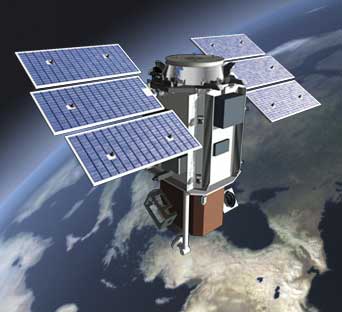

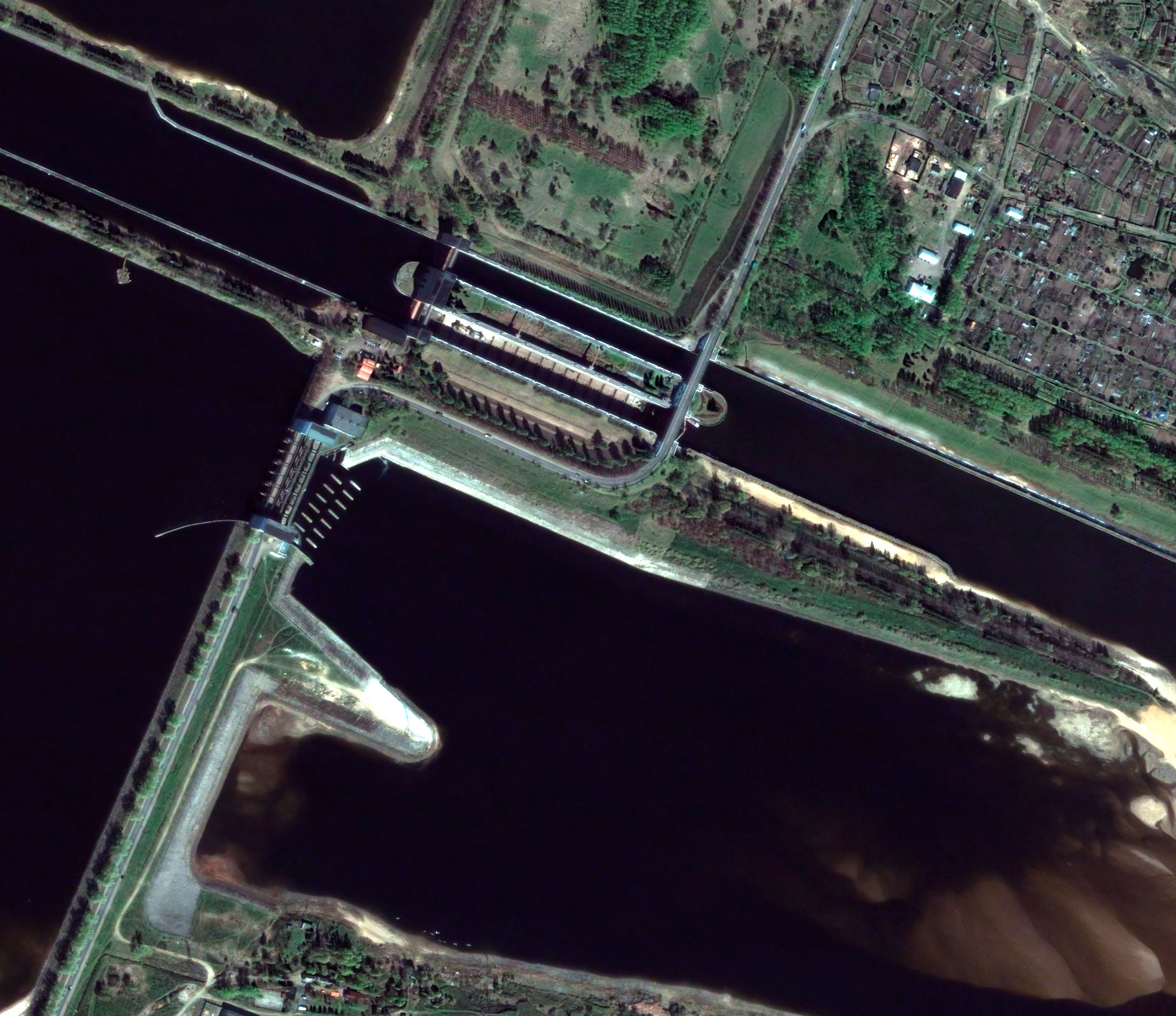
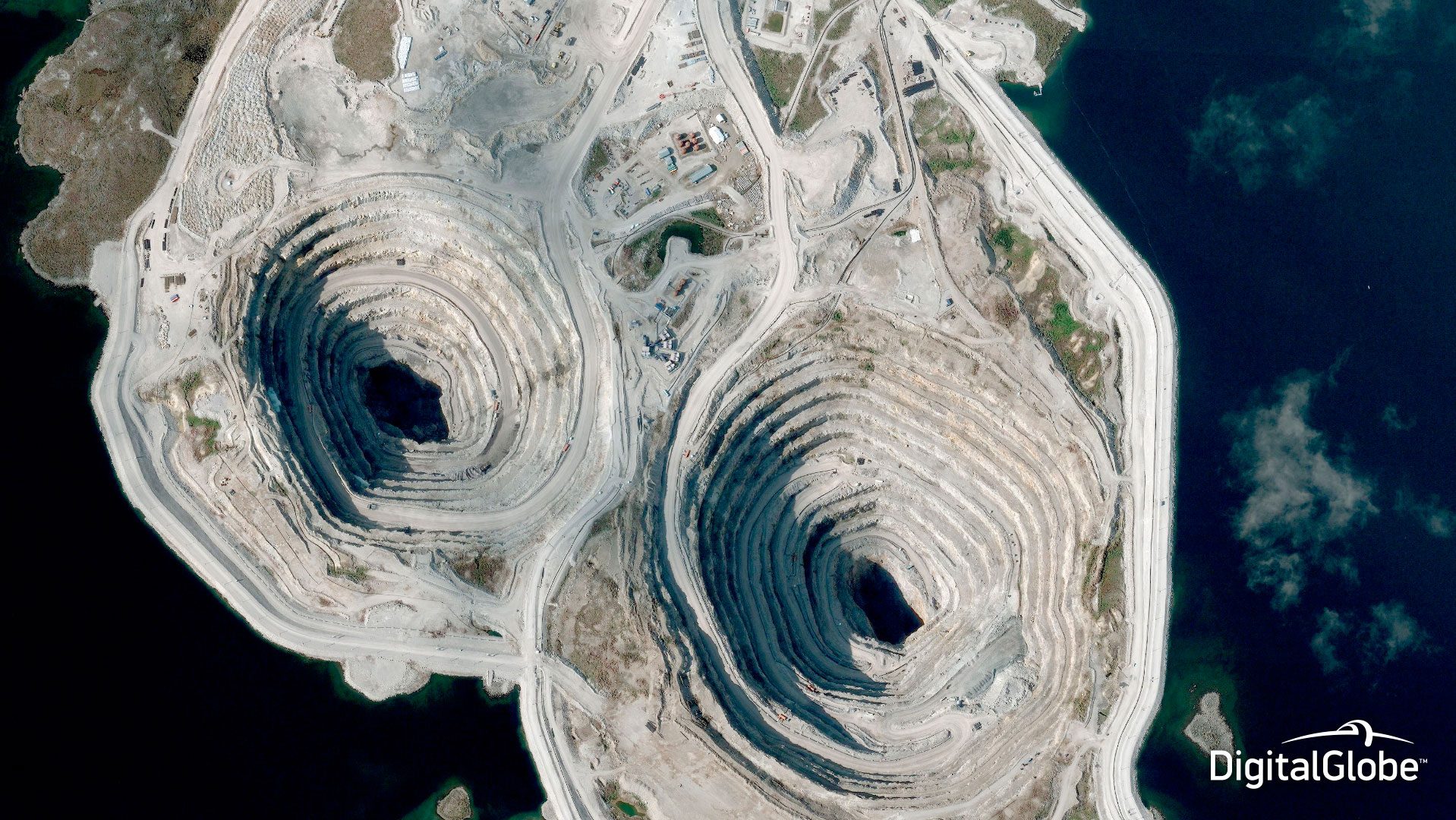
DigitalGlobe’s QuickBird satellite continues to offer sub-meter resolution imagery with high geolocational accuracy. With global collection of panchromatic and multispectral imagery, QuickBird is designed to support a wide range of geospatial applications.
Technical characteristics of the spacecraft imaging systemQuickBird satellite
| Type of shooting | Optical |
|---|---|
| Shooting modes | Mono and stereo |
| Number of channels | 5 |
| Channel set | PAN+RGB+NIR |
| Permission on the ground PAN, m | 0.6 |
| Permission on the ground MS, m | 2.4 |
| Capture width | 16.5 |
| CE90 binding accuracy, m | 23 |
| Dynamic range, bits/pixel | 11 |
Characteristics of the space satellite
| Operator | Maxar Technologies |
|---|---|
| Operating country | USA |
| Launch date | 18.10.2001 |
| Mission completion date | 27.01.2015 |
| Mass of the spacecraft | 1028 |
| Orbit type | Morning sun-synchronous |
| Orbital altitude | 450 |
| Re-shooting period, days | From 3 to 7 |
| Type of shooting to order | Archive |
| Availability of samples | Yes |
Description of the satellite QuickBird satellite
QuickBird 2 was developed and launched for high-quality commercial land observation.It was launched on October 18, 2001 by Delta II from the Vandenberg launch site in California, United States.
QuickBird 2 operates in a sun-synchronous orbit (SSO) at an altitude of about 482 kilometres.
The satellite is capable of receiving images with resolution up to 0.65 metres on panchromatical channels and up to 2.62 metres on multispectral channels. It operates in visible and infrared spectral ranges, which provide data for various analyses of the Earth's surface.
A feature of QuickBird 2 is the high rate of data transmission and the ability to target quickly, making it an effective tool for commercial and public clients in need of operational land observation data.
The satellite is developed by DigitalGlobal (currently Maksar Technologies), which specializes in commercial satellite services and geoinformation systems.