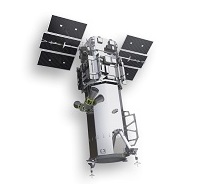
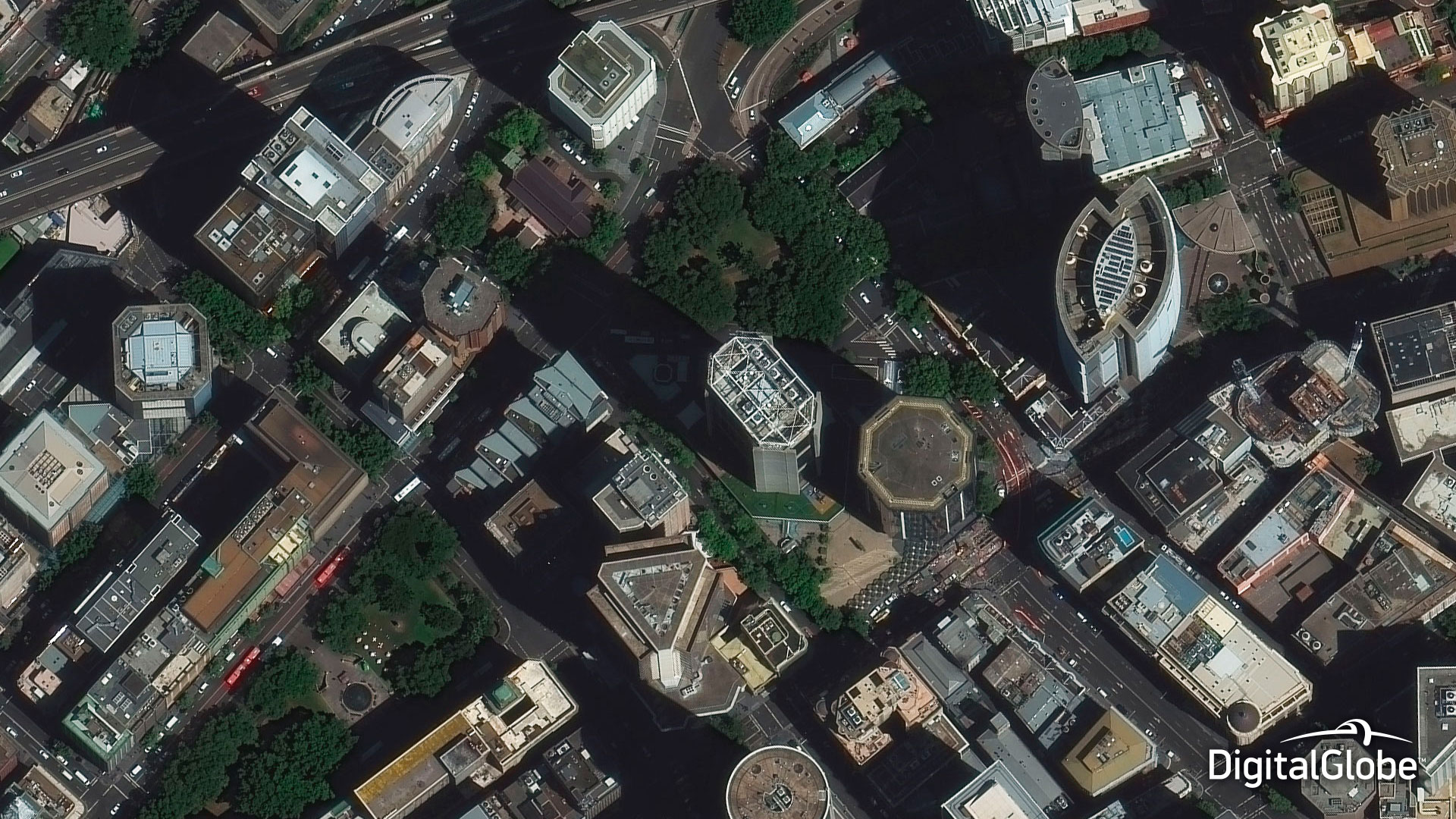
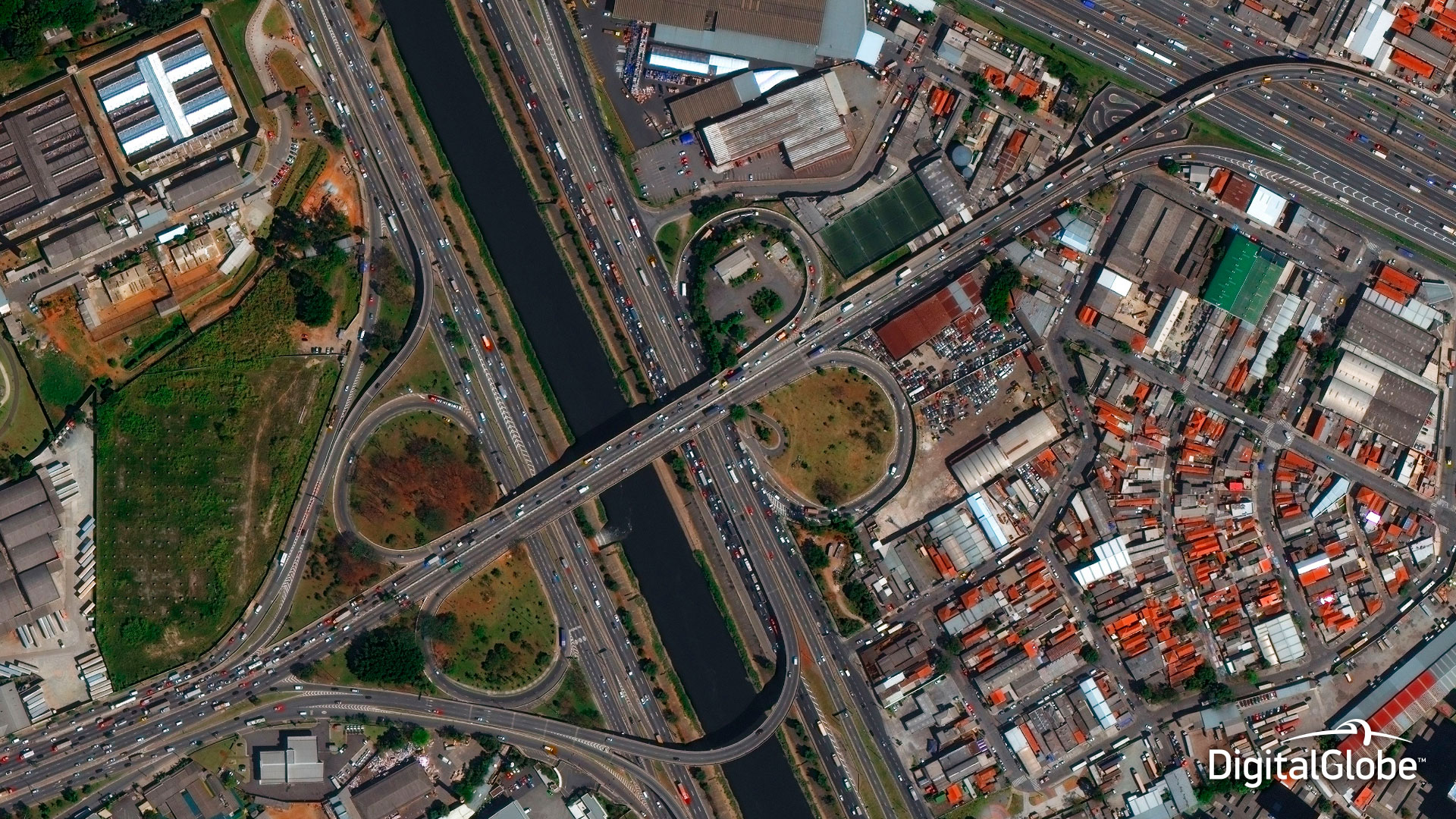


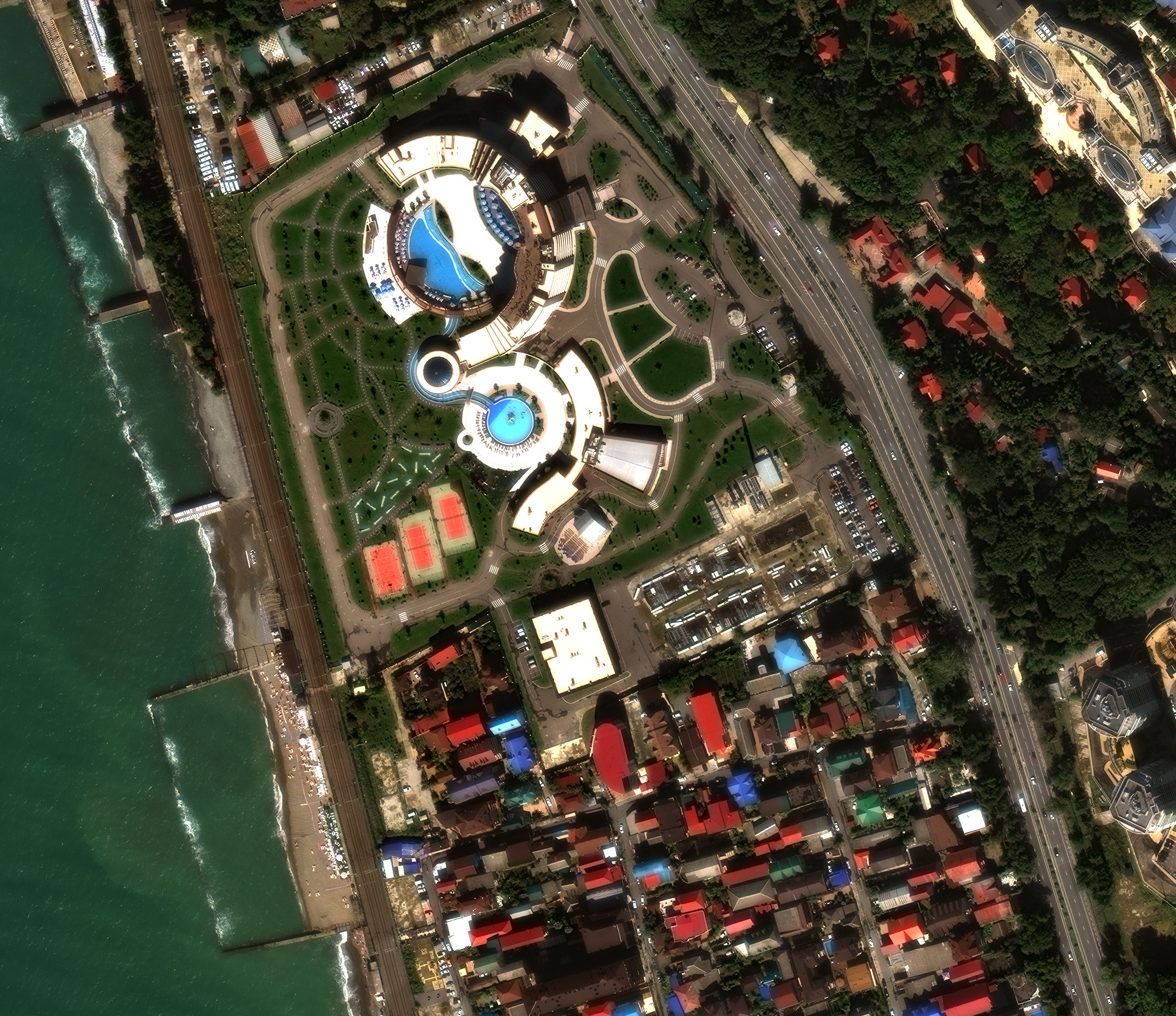

WorldView-3 is the first in the industry commercial satellite with multi-payload, super-spectral and high-resolution. It operates at an altitude of 617 km and provides 31 cm panchromatic resolution, 1.24 m multispectral resolution, 3.7 m short-wave IR resolution and 30 m CAVIS resolution. WorldView-3 can collect up to 680,000 km2 per day due to the average revisit time of <1 day. The satellite is urged to enhance the DigitalGlobe collection capacity.
Technical characteristics of the spacecraft imaging systemWorldView-3 satellite
| Type of shooting | Optical |
|---|---|
| Shooting modes | Mono and stereo |
| Number of channels | 29 |
| Channel set | PAN+VISIBLE (8)+SWIR(8)+CAVIS(12) |
| Permission on the ground PAN, m | 0.31 |
| Permission on the ground MS, m | 1.24 |
| Permission on the ground, m | 3,7 (SWIR), 30(CAVIS) |
| Capture width | 13.1 |
| CE90 binding accuracy, m | 3.5 |
| Method of obtaining a stereo pair | Within a single orbit |
| Dynamic range, bits/pixel | 11(PAN/MS), 14(SWIR) |
Characteristics of the space satellite
| Operator | Maxar Technologies |
|---|---|
| Operating country | USA |
| Launch date | 13.08.2014 |
| Mission completion date | Mission active |
| Mass of the spacecraft | 2800 |
| Orbit type | Sun-synchronous |
| Orbital altitude | 617 |
| Re-shooting period, days | from 1 to 4 (depending on latitude) |
| Service life | 7 |
| Type of shooting to order | Archive/New tasking |
| Availability of samples | Yes |
Description of the satellite WorldView-3 satellite
The WorldView-3 satellite was designed to perform high-quality commercial Earth observation tasks with improved characteristics compared to previous generations of satellites. It is designed to provide very detailed images of the Earth's high-resolution surface for various applications, including mapping, geodesy, resource management, environmental monitoring and other purposes.The WorldView-3 satellite was launched on August 13, 2014 from the Vandenberg launch site in California, United States, using the Atlas V rocket.
The orbital orbit of the WorldView-3 satellite is about 617 kilometres above the Earth's surface.
The resolution of the WorldView-3 satellite is 31 centimetres, allowing for very detailed images of the Earth's surface.
The satellite operates in eight multispectral ranges, including visible, infrared and near infrared spectrums. This ensures that various aspects of the Earth's surface can be analysed on the basis of their physical properties and condition.
The features of the WorldView-3 satellite include the high accuracy of geo-positioning, the ability to switch rapidly between surveying modes, and a wide range of geospatial analysis and monitoring applications.
WorldView-3 is developed by the United States company Maxar Technologies (formerly DigitalGlobal).