From archive and new satellite images to radar data, orthophotomaps, maps and analytical materials.
Search the site
What the service is used for
Maps, plans and cadastre
Creation and updating of topographic, engineering-topographic and cadastral materials from up-to-date remote sensing data.
Change monitoring
Assessment of the territory condition and object dynamics from images of different dates, including operational observation and event control.
Design and infrastructure
Source data for construction, engineering surveys, oil and gas facilities, roads, pipelines and telecommunication networks.
Expert review and evidence
Confirmation of the presence, absence or change of objects on a given date for expert reviews, inspections and legal proceedings.
Environment, agribusiness and emergencies
Control of farmland, vegetation, pollution, natural processes and the consequences of emergencies.
We will select data for the task
Send the territory, period and purpose — we will propose archive, new, optical or radar imagery.
We select data and ready materials for your task
01
Archive satellite images
Black-and-white, colour, multispectral and synthesised images for available archive dates.
For retrospective analysis, comparison of the territory across periods, expert reviews, mapping and confirmation of an object's condition on the required date.
What you get
- images for the required period from the available archive
- a selection by dates
- processed images for analysis
- if required — orthoimagery, fragments, comparative materials
Image availability depends on the archive, cloud cover and the actual acquisition date. Not every territory has an exact image for a specific day.
02
New satellite survey
Arranging a new optical survey with agreed parameters of the territory, period, resolution, angle and cloud cover.
Used when archives have no suitable materials or the most up-to-date information is required.
What you get
- up-to-date satellite images for your territory
- survey taking into account the required period and data requirements
- prepared materials for further use
- if required — orthoimagery, fragments, a cartographic base
The timeline depends on the imaging window, weather, cloud cover and satellite availability. Some tasks may require waiting for a suitable date.
03
Radar data
Radar survey to obtain information under cloud cover and independently of natural illumination.
Suitable for observing the surface and processes when optical images are limited by weather.
What you get
- radar images of the territory
- materials for change analysis
- prepared results for an applied task
- if required — interpretation and analytical findings
Radar data are harder to read visually than ordinary optical images, so a number of tasks require specialised processing and interpretation.
04
Processed materials
Raw images or prepared orthoimages, maps, models, schemes and analytical materials.
The processing scope and delivery format are defined by the terms of reference and the client's task.
What you get
- orthophotomaps
- maps and cartographic materials
- analytical notes and comparative schemes
- prepared images and fragments
- materials for monitoring, expert review and visual justification
The result format depends on the task, source data, required accuracy and the use case.
How the work goes
Cost and timeline
According to the infoblock item:
- overall order guide — from 30,000 ₽
- consultation — free
- imagery selection and preliminary analysis — free
- satellite imagery materials — from 0.1 to 200 USD per 1 km²
- the price depends on archive or new imagery, mono or stereo mode, resolution and spectral bands
- delivery time — from 5 working days; the exact term depends on volume, complexity and archive availability
Cost of ordering images — from 30 000 ₽
Delivery time — from 5 working days
Consultation and preliminary selection — free
What data are needed to select imagery
For an accurate search and quote, provide:
- the task to be solved using satellite images
- territory boundaries, coordinates, district name or an SHP file
- date or time interval of archive or new imagery
- required spatial resolution and mono or stereo mode
- allowed look angles, cloud cover, sun angle and snow cover
- spectral mode, coordinate system, format and composition of the final materials
If the technical parameters are unknown, describing the purpose of the data is enough — specialists will propose a suitable option.
Describe the task in simple words — we will select a suitable solution.
Why Innoter
Fast access to archives
Suitable archive materials can be obtained faster if the required territory and date are already held by operators.
No aviation clearances
A new satellite survey does not require the flight clearances typical of aerial survey.
Large and remote territories
A single satellite pass covers large areas and makes it possible to work with hard-to-reach regions.
Direct agreements with operators
Distribution agreements help select archive imagery and order new surveys from different suppliers.
Software and server infrastructure
Modern software and server capacity for quality control and processing of large data volumes.
Experienced specialist staff
Many years of experience on complex projects and specialists in mapping, photogrammetry and remote sensing.
How to select satellite survey parameters
From construction monitoring to assessing the aftermath of emergencies — you get an objective picture without a site visit and extra costs.
1
Satellite imagery is one of the methods of remote sensing of the Earth's surface using spacecraft, located in orbit. It provides images of the terrain in the visible, infrared and radio bands of the spectrum with specified parameters and characteristics.
Earth remote sensing is the observation and measurement of natural and reflected radiation of land, ocean and atmosphere in various electromagnetic-wave bands. Specialised equipment is installed on spacecraft and other aircraft and is used to detect changes, locate and track the temporal variability of natural phenomena, Earth objects, the environment and anthropogenic objects.
Satellite imagery of the Earth is an efficient and cost-effective way to obtain spatial data. Modern satellite images have high measuring and imaging properties and are supplied in digital form. The spatial resolution of available materials reaches 30 cm, and orbital georeferencing accuracy can be 2.5 m RMSE, which makes it possible to solve tasks of the state, science and business.
New and archive satellite imagery is ordered through authorised partners of the operators. GEO Innoter selects, supplies and processes aerial and satellite images and creates derived products. Satellite imagery is used as an objective and independent source of information: to analyse territory development, track change dynamics, obtain data on hard-to-reach objects, work with archive and recent information, and detect objects and events with high accuracy.
2
Spatial resolution is the size of the smallest terrain detail reproduced on the image. It is defined by pixel size: for an image with 1 m spatial resolution one pixel corresponds to a 1 × 1 m area of the Earth's surface.
There is no single unified classification of spatial resolution. The following grading is used in the service materials:
- very low — worse than 100 m;
- low — 15–100 m;
- medium — 5–15 m;
- high — 1–2.5 m;
- very high — 0.5–1 m;
- extra-extra-high — 0.15–0.5 m.
The choice of resolution depends on the objects to be distinguished, the area of the territory, the observation frequency and the processing result. For photogrammetry the source content gives the following guides: for scale 1:5,000 — resolution 0.25 m; for 1:10,000 — 0.5 m; for 1:25,000 — 1.25 m; for 1:50,000 — 2.5 m. The main criteria of image suitability for orthophotomaps are spatial resolution, georeferencing accuracy and other parameters of the terms of reference.
By coverage, images are divided into global, large-regional, regional and local. Global images cover the planet, large-regional — continents and large regions, regional — individual regions and their parts, local — cities, industrial complexes and small areas. The more detailed the image, the smaller, as a rule, the area of one frame, and the more important it is to define the area of interest correctly.
For extra-high-detail tasks, data from the following spacecraft may be considered WorldView-1, WorldView-2, WorldView-3, GeoEye-1. For archive analysis over long periods, data from Landsat-7. The specific source is selected after checking the archive, parameters and licence terms.
3
Satellite imagery differs by scale, spatial resolution, coverage and spectral characteristics. These parameters determine the possibilities of object interpretation and the range of tasks that can be solved from the images.
By the nature of coverage of the Earth's surface, four main types of satellite imagery are distinguished:
- Single, or selective, photography. Performed for individual areas; images may be oblique and have significant tilt angles.
- Strip survey. Performed along the satellite's orbital flight. Strip width depends on flight altitude and the viewing angle of the imaging system. Fan imaging with several systems may be used to widen the swath.
- Targeted survey. Intended to acquire images of specially designated areas off the satellite track.
- Global survey. Performed from geostationary and polar-orbiting satellites and provides regular overview images of large territories.
The order also specifies the survey mode: mono or stereo. A mono image is suitable for visual analysis and many kinds of thematic processing. Stereo survey is required when a digital elevation model, height measurement or photogrammetric processing is needed. The mode affects the source-data composition, cost, order area and operator requirements.
4
GEO Innoter works with the main operators of remote sensing spacecraft and supplies images from both optical and radar satellites. Materials with various characteristics are available: from extra-high-detail imagery with 30 cm spatial resolution to medium-resolution overview images for regional-scale tasks.
Optical images are close in visual properties to human perception of the surroundings: colour, shape, structure and relative position of objects are analysed on them. They are used for visual and automated interpretation, mapping, construction monitoring, land use, forests, farmland and the environment.
The request can specify panchromatic, multispectral or hyperspectral imagery. Several spectral bands make it possible to detect vegetation condition, plant diseases and the vegetation phase, and to analyse water bodies, soils, geological features and pollution sources.
Radar images are formed by a different physical principle and provide an image of the Earth's surface regardless of cloud cover and time of day. Their interpretation requires specialised knowledge. Radar data are used, for example, to detect oil films, analyse ice structure, perform geodynamic monitoring and operational control of emergencies.
5
The quality of satellite photography depends on the imaging system, orbital altitude, spatial resolution, georeferencing accuracy, off-nadir angle, sun angle, cloud cover, snow cover and the survey period. When selecting materials these parameters are checked together, because high detail alone does not guarantee that an image is suitable for a specific task.
Remote sensing data processing is divided into preliminary and thematic. Preliminary processing transforms the source information received by a ground station into standard remote sensing products suitable for archiving and further use. It usually includes radiometric correction, geographic referencing and geometric correction of the image.
After incoming quality control, satellite images may undergo photogrammetric and thematic processing, orthorectification, colour and lighting correction, mosaicking, interpretation and preparation of derived materials. You can order photogrammetric processing, remote sensing imagery interpretation, orthophotomap creation, maps, digital models and analytical materials.
Satellite images can be combined with ready vector or raster data in GIS after geometric and perspective distortions are removed, after alignment, scaling and conversion to an agreed coordinate system.
6
Archive data are suitable when an image of the required territory, date and characteristics is already held by the operator. They can be obtained faster, and the cost is usually lower than a new survey. A new survey is ordered if the current state of the territory, a given season or period, specific angles, cloud cover, spectral characteristics are required, or archives have no suitable coverage.
The advantage of high- and very-high-resolution satellite imagery is speed and large coverage. An archive image may be available immediately, and a new satellite survey does not require flight clearance from government authorities. One satellite image covers a substantially larger area than a frame from an aircraft or UAV. Satellite photography is especially effective for hard-to-reach territories where field work is costly.
Medium-spatial-resolution images are widely used to monitor crops, inventory land, support precision agriculture, search for minerals, control water bodies, emergencies, forests and the environment. They are used as a backdrop for large territories and to create and update maps at scale 1:100,000 and smaller.
High-spatial-resolution images are used to create and update topographic and special maps up to a scale of 1:25,000, build digital elevation models, control construction and oil-and-gas infrastructure, perform environmental monitoring, territorial planning, forest inventory, crop-condition assessment, and monitoring of waterlogging, desertification, salinisation, karst, erosion and fires.
Modern applications of satellite imagery include meteorology, oceanology, geology and geomorphology, studies of glaciers, wetlands, deserts and forests, land accounting, natural and economic zoning, and creation and updating of thematic and general geographic maps.
Frequently asked questions
Answers to key questions about service parameters, timelines, deliverable formats and workflow. If you did not find what you need — contact us and we will help.
The problem to be solved using space imagery;
area of interest (location / coordinates of the object in any convenient form, and the area of the object);
date or time interval for which the archived imagery can be picked up or a new imagery can be performed;
imaging requirements (image angle, sun angle, spatial resolution, type of imaging, cloud cover, permissibility of snow cover)
area of interest (location / coordinates of the object in any convenient form, and the area of the object);
date or time interval for which the archived imagery can be picked up or a new imagery can be performed;
imaging requirements (image angle, sun angle, spatial resolution, type of imaging, cloud cover, permissibility of snow cover)
As a rule, the minimum ordering area for archived space imagery is 25 km2, and for new space imagery - 100 km2.
The minimum order strip width (distance between two nearest points) can be from 2 to 5 km depending on the spacecraft operator, imaging mode and product.
The minimum order strip width (distance between two nearest points) can be from 2 to 5 km depending on the spacecraft operator, imaging mode and product.
- For new imagery: if the area of work is known in advance, but there are no images with the required parameters in the archives of spacecraft operators and the allowed time interval for new imagery is long enough to complete it in standard mode (without extra charge for acceleration and priority), there is an option of speculative imagery - that is de facto new imagery, but without obligations to buy out. Since archived remote sensing materials are cheaper than ordering new imagery, as soon as the speculative imagery is archived, it can be purchased at a reduced price. After 60 days the price is usually further reduced.
- For new and archived imagery: If the area of interest is a set of separate unconnected polygons, each smaller than the minimum order area (25 km2 for archival imagery or 100 sq.km. (see point 1)), it is reasonable to combine them into polygons, each larger than the minimum order area to reduce the total cost.
The time of work performance depends on the area of the territory, requirements to the parameters of the survey. Minimal term of work execution is from 4 hours. Standard delivery time - 5 working days
100% prepayment on the bill for remote sensing materials after signing the contract, the rest of the payment after the execution of works.
YES. We work with individuals and legal entities, individual entrepreneurs, state and municipal authorities, foreign customers, etc.
The main criteria of orthophoto suitability are spatial resolution, accuracy of objects georeferencing, etc. The main criteria of orthophoto suitability are spatial resolution, accuracy of objects georeferencing, etc. For more details see here
The resolution of satellite photos varies depending on the instrument and the orbital altitude of the satellite. For example, the Landsat project captured images of the Earth's surface with a resolution of 30 m, but most of these images have not yet been processed.
Commercial QuickBird series satellites by DigitalGlobe have the highest resolution to date - 60 cm, i.e. they allow identification of objects on the Earth surface smaller than half a meter.
Satellite imagery is often supplemented by aerialimagery, which allows to obtain a higher resolution, but has a higher unit cost (expressed in expenditures of monetary units per m²). Also satellite images can be combined with ready vector or raster images in GIS-systems (provided that perspective distortions are eliminated on the images and they are appropriately aligned and scaled).
The first satellite imagery from space was taken on October 24, 1946 from the V-2 rocket (USA), but it is believed that the era of space imagery began in 1972 when the first Landsat satellite was launched. During almost 50 years of its history space imagery has changed beyond recognition: the film was replaced with digital media, the spatial resolution improved from 1000 m to 0.3 m and the number of possible spectral channels increased from 1 to 256.
In 1977, the KH-11 reconnaissance program produced the first "real-time" image.
The first space images of high spatial resolution were obtained in the 1980s. Such imaging systems were on military satellites, were created specifically for intelligence purposes and supplied data for mapping enemy territories during the Cold War. The Soviet Kometa satellites had a KVR-1000 camera, which allowed taking detailed images with a spatial resolution of 2 m.
Satellite imagery is carried out by different methods. According to the nature of coverage of the Earth's surface by space images, the following surveys can be distinguished:
Single (selective) imagery is performed by cosmonauts with handheld cameras. The images are usually perspective with significant tilt angles.
Routine imaging of the Earth's surface is done along the satellite's flight path. The width of the imaging strip depends on the flight altitude and the viewing angle of the imaging system.
Targeted (selective) imaging is intended for obtaining images of specially specified areas of the earth's surface away from the route.
Global imagery is performed from geostationary and polar-orbiting satellites. Four or five geostationary satellites on the equatorial orbit provide practically uninterrupted obtaining of small-scale survey images of the whole Earth (space patrol) except for the polar caps.
- single imagery;
- route;
- targeted;;
- global imagery.
Single (selective) imagery is performed by cosmonauts with handheld cameras. The images are usually perspective with significant tilt angles.
Routine imaging of the Earth's surface is done along the satellite's flight path. The width of the imaging strip depends on the flight altitude and the viewing angle of the imaging system.
Targeted (selective) imaging is intended for obtaining images of specially specified areas of the earth's surface away from the route.
Global imagery is performed from geostationary and polar-orbiting satellites. Four or five geostationary satellites on the equatorial orbit provide practically uninterrupted obtaining of small-scale survey images of the whole Earth (space patrol) except for the polar caps.
Remote sensing data processing is divided into two stages: preliminary processing and thematic processing. Pre-processing is usually understood as a set of actions (processes) transforming the initial information received by a ground receiving station into some remote sensing products of standard processing levels suitable for archiving and further use. As a rule, preprocessing includes such processes as radiometric correction, geo-referencing and geometric correction of images.
Satellite imagery / satellite data is a type of survey performed by means of spacecraft (SC) from an altitude of more than 150 km, as well as imaging the Earth or other planets by means of satellites.
Advantages of satellite imagery. Flying satellite doesn't experience vibrations and sharp fluctuations, therefore space images can be acquired with higher resolution and image quality than aerial images. Images can be digitized for further computer processing.
Disadvantages of space imagery: The information cannot be automatically processed without preliminary transformations. During space imagery the points are shifted (due to the curvature of the Earth), their value on the edges of the image reaches 1.5 mm. The consistency of scale is disturbed within the image, the difference between the edges and the center of the image may be more than 3%.
The disadvantage of imageryy is its inefficiency, because the container with the film comes down to the Earth no more often than once in several weeks. Therefore imagery space images are rarely used for operational purposes, but represent information of long-term use.
High costs for the creation and deployment of the CS due to the complexity of space technology and the need to launch expensive boosters to reach the working orbit of the spacecraft.
Advantages of satellite imagery. Flying satellite doesn't experience vibrations and sharp fluctuations, therefore space images can be acquired with higher resolution and image quality than aerial images. Images can be digitized for further computer processing.
Disadvantages of space imagery: The information cannot be automatically processed without preliminary transformations. During space imagery the points are shifted (due to the curvature of the Earth), their value on the edges of the image reaches 1.5 mm. The consistency of scale is disturbed within the image, the difference between the edges and the center of the image may be more than 3%.
The disadvantage of imageryy is its inefficiency, because the container with the film comes down to the Earth no more often than once in several weeks. Therefore imagery space images are rarely used for operational purposes, but represent information of long-term use.
High costs for the creation and deployment of the CS due to the complexity of space technology and the need to launch expensive boosters to reach the working orbit of the spacecraft.
The most popular is medium spatial resolution space imagery. And it is easy to explain, because free images with the highest spatial resolution up to 10 m belong to this type of imagery. All the scientific community actively uses them for a variety of tasks, for example, students use them to study space imagery and processing methods. An important feature of such satellites as Landsat-8 is the availability of a large number of spectral channels, which enables to resolve an extremely diverse range of tasks:
-
Crop condition monitoring.
-
Inventory of agricultural land, creation of land use plans, precision farming.
-
Mineral prospecting.
-
Monitoring of small and medium-sized water bodies.
-
Monitoring of emergencies.
-
Inventory and assessment of forests.
-
Wide range of tasks in environmental protection etc.
Based on medium spatial resolution data it is also possible to create and update topographic maps at 1:100 000 and finer scales. It is the medium spatial resolution data that most popular applications use as a single substrate with space images for the whole territory of the Earth.
- Creation and updating of topographic and special maps up to 1:25 000 scale.
- Creation of digital elevation models with 5-10 m elevation accuracy.
- Inventory and control of oil and gas transportation and production infrastructure construction.
- Monitoring environmental condition of the territories in the areas of production, processing, transportation of oil and gas and other minerals.
- Updating the topographic basis for the development of projects of territorial planning schemes of municipal districts and regions of the Russian Federation.
- Performing forest surveys, forest inventory, regular control of forest use and forest condition monitoring.
- Agricultural land inventory, crop condition monitoring, weed assessment, crop pests and diseases detection, yield forecasting.
- Monitoring and forecasting of waterlogging and desertification processes, salinization, karst, erosion, steppe fires, etc.
Space images are acquired from heights above 100 km, i.e. when the carrier is moving outside the atmosphere, in outer space, from rockets, manned spacecrafts and orbital stations, automatic satellites and other spacecrafts.
At present, with the development of modern technology, we can divide the areas of use of space imagery into different types, since the coverage of the earth's surface by satellites is very large.
We use data from space imagery every day, whether it is meteorology, with the help of which specialists make weather forecasts for a certain period of time or the creation of all kinds of maps, which have become an integral part of everyone's life.
- meteorology (study of cloud cover, snow cover, etc.);
- oceanology (study of currents, bottom, shallow waters, etc.);
- geology and geomorphology (especially of formations of large extent);
- studies of glaciers, swamps, deserts, forests;
- recording cultural lands, natural and economic zoning of areas;
- creation and updating of small-scale thematic and general geographic maps.
We use data from space imagery every day, whether it is meteorology, with the help of which specialists make weather forecasts for a certain period of time or the creation of all kinds of maps, which have become an integral part of everyone's life.
- scale;
- spatial resolution;
- visibility;
- spectral characteristics.
These parameters determine the possibilities of interpretation of various objects on space images and the solution of those geological problems, which are expedient to solve with their help.
1. Global, covering the entire planet. The width of the coverage area is more than 10 thousand kilometers, and the territorial coverage is hundreds of millions of square kilometers.
2. Large-region images, reflecting the continents, their parts and large regions - images from meteorological satellites in near-Earth orbits, as well as low and medium resolution images from resource satellites. The swath width varies from Z thousand km with low resolution images to 500 km with middle resolution ones, spatial coverage makes up millions of square km. One image of this type would cover Western Europe, almost the whole of Australia, Central Asia and Tibet.
3. Regional, which depicts regions and their parts, are images from resource and mapping satellites, as well as from manned spacecraft and orbital stations. The most typical coverage is 350 x 350 km2, 180 x 180 km2, and 60 x 60 km2. An image of similar coverage would show a state like Belgium, a small region like Moscow, large megalopolises.
4. Local - images of relatively small area, - satellite images for detailed observation and large-scale mapping with the coverage of 10 x 10 km2. Such an image will show an industrial complex, a large farm, a small town, and for Moscow several images will be required.
2. Large-region images, reflecting the continents, their parts and large regions - images from meteorological satellites in near-Earth orbits, as well as low and medium resolution images from resource satellites. The swath width varies from Z thousand km with low resolution images to 500 km with middle resolution ones, spatial coverage makes up millions of square km. One image of this type would cover Western Europe, almost the whole of Australia, Central Asia and Tibet.
3. Regional, which depicts regions and their parts, are images from resource and mapping satellites, as well as from manned spacecraft and orbital stations. The most typical coverage is 350 x 350 km2, 180 x 180 km2, and 60 x 60 km2. An image of similar coverage would show a state like Belgium, a small region like Moscow, large megalopolises.
4. Local - images of relatively small area, - satellite images for detailed observation and large-scale mapping with the coverage of 10 x 10 km2. Such an image will show an industrial complex, a large farm, a small town, and for Moscow several images will be required.
Spatial resolution - the size of the smallest detail of the terrain reproduced on the image is determined by the pixel size. That is, for an image with spatial resolution of 1 m a pixel has a size of 1x1 m.
According to the nature of coverage of the Earth's surface by space images, there are several types of space imagery, such as single imageryy, route imageryy, targeting and global imagery:
1) Single (selective) imagery is performed by cosmonauts with handheld cameras. Images are obtained perspective with significant angles of inclination.
2) Routine imaging of the Earth's surface is performed along the orbital flight of the satellite. The width of the imaging swath depends on the flight altitude and the view angle of the imaging system. In order to increase the field of view, a "fan" imaging is practiced - across the flight direction by two or three high resolution imaging systems.
3) Targeted (selective) imaging is intended for obtaining images of specially defined areas of the earth's surface away from the route.
4) Global imagery is carried out from geostationary and polar-orbiting satellites. From 4 to 5 geostationary satellites on the equatorial orbit provide practically continuous small-scale survey images of the whole Earth except for the polar caps.
GEO INNOTER cooperates with all major operators of remote sensing satellites and supplies images from both optical and radar satellites.
Images with different characteristics are available for ordering, from extra-high resolution images with a spatial resolution of 30 cm, to medium resolution overview images for regional scale tasks.
Images with different characteristics are available for ordering, from extra-high resolution images with a spatial resolution of 30 cm, to medium resolution overview images for regional scale tasks.
The differences of these images are based on different principles of their formation and, accordingly, on their visual properties.
Optical images are close in their visual properties to human perception of the surrounding reality (color, shape, structure, etc.) and are used for a wide range of visual and automated interpretation tasks.
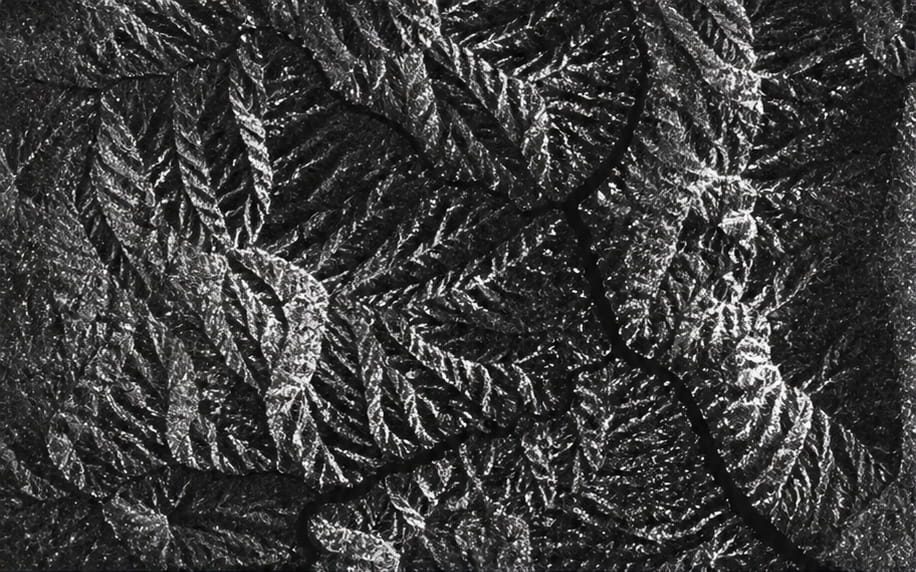
Radar images allow to obtain images of earth surface regardless of weather conditions and at any time of the day, but the properties of these images imply specialized knowledge for their interpretation, as well as highly specialized directions of their use (oil films, ice structure, geodynamic monitoring, operational monitoring of emergencies, etc.).
GEO Innoter specialists will be happy to provide samples of different types of data and give advice on the best choice of data for your task. Contact a specialist in the chat on the company's website, or write to innoter@innoter.com. Be sure to include your last name, contact information and the name of your organization
Our company provides such a service, more reference.
Our company provides photogrammetric processing, thematic processing, as well as other services
The satellite imagery are delivered in standard raster formats, the complete delivery set also includes metadata files, and georeferencing files. All standard projection types are also supported.
Upon agreement with the customer, the data can be converted to meet the customer's special requirements
Upon agreement with the customer, the data can be converted to meet the customer's special requirements
To buy satellite images of high and ultra-high resolution you can place an order on the site and we will contact you!
Delivery time for satellite images is from 5 (five) working days and is calculated individually for each customer.
Need satellite imagery or help choosing the right data?
Describe your task, area of interest, and desired outcome. We will check data
availability, assess new acquisition options, and propose the optimal solution in terms of timelines, cost,
and quality.
Discuss the project
clients who trust us
25+ years in the geodata market